
On 25th September, 2026, Mrs Dzagbele Matilda Asante shall celebrate her 99th birthday. Many Ghanaians cross many generations know K.B Asante but they do not know Mrs Matilda Asante eventhough she equally played a very significant role in national development.
To stand in the shadow of a giant is a quiet fate, but to be the foundation upon which that giant stood is a legacy of a superior order. For decades, the name Asante has resonated through the corridors of power and the pages of the Daily Graphic as a synonym for diplomatic rigour and patriotic intellect.
We knew the husband, the formidable K.B. Asante, the “Voice from Afar” who articulated the soul of a nation. Yet, while the diplomat negotiated the boundaries of our sovereignty, his wife, Dzagbele Matilda Asante, was busy healing the very humanity that sovereignty is meant to protect.
Mr. President, members of the Government, and the Nurses and Midwifery Council: history is often a loud narrative of men in suits, but the morality of a nation is written in the quiet service of women in white. Born in the Gold Coast in 1927,
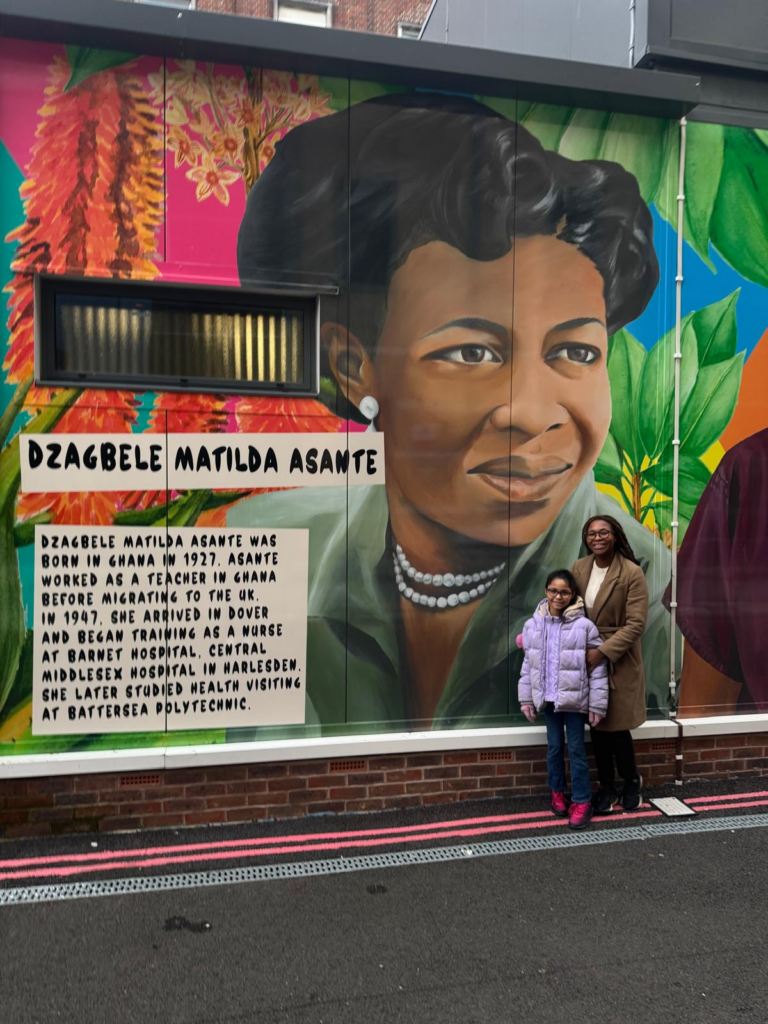
Matilda Asante did not merely witness our transition from colony to nation; she authored it with the precision of a surgical needle and the authority of a stateswoman. Her journey from a classroom teacher to the austere wards of Barnet and Central Middlesex Hospitals in the 1940s was more than a career move, it was a constitutional act of defiance.
To arrive in Dover in 1947, at the dawn of the Windrush era, was to step into a landscape that often viewed the Black body as a tool for labour, but rarely as a vessel of clinical expertise. Matilda Asante dismantled that prejudice one patient at a time.
As a pioneer of the fledgling NHS, she proved that the African intellect is not local, but universal. Yet, the true weight of her story lies in the homecoming.
While many chose the comfort of the diaspora, Matilda returned to Ghana to build. If K.B. Asante was the architect of our external relations, Matilda was the healer of our internal fabric.
The Nurses and Midwifery Council must take note: her contribution was not merely clinical, but pedagogical.
If the archives of the State are silent on her impact, one need only consult Professor Agyeman Badu Akorsah and his peers. They represent the living testimony of her intellect.
She did not merely “work” as a nurse; she was part of the engine of the Medical School, lecturing and tempering the minds of those who would become the guardians of our national health. She was the teacher of teachers, the nurse who instructed doctors.
The juxtaposition of her life is staggering. By day, she moved in the highest circles of global diplomacy alongside her husband; by evening, and long into her retirement, her private compound became a sanctuary.
This is where the legal meets the moral. Long after the official seals of retirement were set, she treated mothers and children in her own home, providing the healing that the formal system often failed to reach. This is the mark of a true patriot: one whose service is not bounded by a contract, but by a conscience.
At 98 years of age, Mrs. Asante stands as a living bridge to our founding era. She is a centenarian sentinel of excellence. It is a curious paradox of our national memory that we celebrate the man who writes the history but overlook the woman who preserves the breath of those who live it. To ignore her contribution is to leave a page of our national diary intentionally blank.
Aphorisms often tell us that behind every great man is a great woman, but in the case of the Asantes, they stood side-by-side, one tending to the body politic, the other to the bodies of the citizenry.
A daughter of the soil should not have to seek her flowers in a foreign mural in London while her own Republic remains silent.
Recognition is the currency of inspiration. By awarding Dzagbele Matilda Asante, you are not just honouring a nurse; you are validating the entire nursing and midwifery profession as a pillar of the State.
Mr. President, the time to say “Thank You” to this matriarch of medicine is not tomorrow; it is now. Let it be said that under your stewardship, Ghana finally looked beyond the “Voice from Afar” to honour the hands that were always near. Justice delayed in recognition is a legacy diminished. Give this pioneer her due.
About the Author
