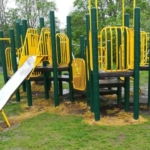
A new study in the United Kingdom has found traces of the weedkiller glyphosate and its toxic breakdown product, AMPA, in children’s playgrounds in England.
The research was carried out by Pesticide Action Network (PAN) UK. Scientists tested soil and plants and also swabbed children’s play equipment in 13 playgrounds across three English counties and two London boroughs. The study found glyphosate residues on the ground and on equipment.
None of the playgrounds were close to farms. This suggests that the contamination likely comes from the routine use of glyphosate by local councils to control weeds in public spaces like parks, pavements, and playgrounds.
Policy Officer at PAN UK, Nick Mole, described the findings as deeply worrying. He said it is very concerning to find a highly hazardous pesticide in places meant for children to play safely.
According to him, the use of glyphosate in the UK has increased sharply in recent years. At the same time, scientific evidence linking the chemical to serious health problems has also grown. He warned that young children are especially at risk because they often put their hands and objects into their mouths.
“We all know that young children tend to put their fingers and other items in their mouths so finding glyphosate residues in playgrounds, including on play equipment such as swings and slides, is particularly worrying,” Nick indicated. Glyphosate has been linked to several long-term diseases, including cancer. Children are more vulnerable than adults because their brains and bodies are still developing and cannot easily handle toxic substances.
A 2023 study by the University of California, Berkeley School of Public Health found that childhood exposure to glyphosate and AMPA could increase the risk of serious diseases later in life. These include liver cancer, diabetes, and heart disease.
Despite these risks, most UK councils continue to use glyphosate. About 45 percent of councils are taking steps to reduce or stop pesticide use, but the majority still apply glyphosate in public areas, mainly for cosmetic reasons. In 2024 alone, councils reported using 354 tonnes of pesticides, almost equal to the weight of 23 double-decker buses. Official data shows that glyphosate-based products make up 96 percent of all pesticides used by local councils.
A specialist in Molecular Genetics and Toxicology at King’s College London and and contributor to the recently published Global Glyphosate Study, Professor Michael Antoniou, said many studies now show that glyphosate exposure increases the risk of serious diseases. These include fatty liver disease, kidney disease, and several types of cancer, including leukaemia.
He challenged claims by government regulators that glyphosate is safe. According to him, recent scientific evidence shows that a truly safe dose of glyphosate is still unknown. He called for strong efforts to reduce its use, especially in cities and places used by children.
“Thus, all efforts should be made to reduce glyphosate herbicide use in both agricultural and urban settings, and to eliminate unnecessary routes of exposure, especially for children.”
Out of the five areas tested, only the London Borough of Hackney showed no traces of glyphosate or AMPA. Hackney Council stopped using pesticides in all parks, green spaces, and housing estates in 2021. The council has also reduced pesticide use in other areas.
Hackney Councillor Alastair Binnie-Lubbock said the council is proud to protect the health of residents, workers, and the environment by cutting down glyphosate use. He said parents and children can now enjoy playgrounds in Hackney without fear of toxic chemicals.
He urged other councils to follow the same path, saying that going pesticide-free is not as difficult as it may seem, can save money in the long run, and is popular with residents.
“We urge other UK councils to tackle their own pesticide use. While it may seem daunting at first, it’s actually not that hard to do, can save money in the long-run and is hugely popular with residents.”
PAN UK is calling on all councils to adopt its three-year pesticide phase-out plan. So far, 50 councils across the UK have already gone pesticide-free.
Campaigners are also urging governments in England, Scotland, Wales, and Northern Ireland to introduce nationwide bans on pesticide use in public spaces, following the examples of France, Denmark, and the Netherlands. They say councils should be supported with safe and sustainable non-chemical alternatives.
Meanwhile, a new Bill in the UK Parliament, introduced by MP Sian Berry, aims to end pesticide use by local councils in England. Although Chemicals Minister Emma Hardy has admitted the need to reduce pesticide use, no firm action has yet been taken.
The UK government is expected to launch a public consultation in early 2026 on whether glyphosate should continue to be approved. A final decision is expected by mid-December. Children’s health advocates say they will push for a complete ban on glyphosate in public spaces, especially in playgrounds.
About the Author