
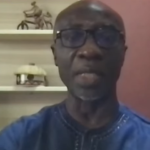
Professor of International Law at the University of Ghana, Prof. Kwadwo Appiagyei-Atua, has stated that picketing at the United States Embassy in Accra will not influence the extradition proceedings involving former Finance Minister, Ken Ofori-Atta, currently before an immigration tribunal in the United States.
His comments follow recent protests by a pressure group, Arise Ghana at the US Embassy in Accra, which demanded the return of Ken Ofori-Atta to Ghana to face investigations by the Office of the Special Prosecutor.
Speaking on Joy FM’s Top Story on Tuesday, Prof. Appiagyei-Atua said the US legal system operates on a strong separation of powers, which insulates judicial processes from public pressure and political influence.
“I don’t think the pickets at the US Embassy will have any impact at all on the proceedings that are taking place in the faraway United States of America,” he said.
According to him, while the demonstrators are exercising their constitutional right to free expression, their actions are unlikely to affect the outcome of the case.
“Of course, the picketers are expressing their freedom of expression, which is entirely within their rights, and there is space within which they can do that. They have not infringed on the inviolability of the embassy premises, so they are within their rights. But as to the likelihood of that influencing the outcome of the hearing in the US, I am not sure it will have any impact,” he noted.
When asked whether the protests could affect Ghana’s extradition request, Prof. Appiagyei-Atua was categorical that they would not.
He explained that regardless of how many times demonstrations are held in Ghana, the final decision lies solely with US authorities.
“It is entirely at the discretion of US authorities to make a decision, not being affected by how many pickets we have in Ghana,” he stressed.
Prof. Appiagyei-Atua pointed to the strength of institutional independence in the United States as a key reason public protests would not sway the process.
“In the US, the separation of powers, at least compared to Ghana, works better,” he said.
He acknowledged, however, that under the current administration, the Immigration and Customs Enforcement (ICE) agency has been given extensive powers, sometimes blurring the lines between executive and judicial functions.
Despite this, he maintained that the immigration tribunal currently hearing the case remains independent.
“In general, the US immigration tribunal hearing the case now is totally independent of the other arms of government, and they will make that decision without any particular influence,” he added.
About the Author
