

Transparency International Ghana is pushing for an amendment of the Public Procurement Act, Act 663, to mandate procurement entities to proactively publish full contract details.
The accountability organisation observes that the absence of legislation requiring government institutions to make public the full document of a contractual agreement is one of the enabling channels for corruption.
The existing Act only allows institutions to declare the notice of the contracts without revealing the details of the agreement, which they believe defeats the purpose of transparency.
Presenting its findings on Ghana’s foreign investment policies to stakeholders in Kumasi, the organisation posted that the policy gaps are being exploited by public officials and foreign investors to the disadvantage of the nation.
“The Public Procurement Act only requires the publication of the notice of contract and not the full contract. This makes it extremely difficult for proper monitoring and evaluation of the investment projects,” said Benedict Doh, a representative of Transparency International Ghana.
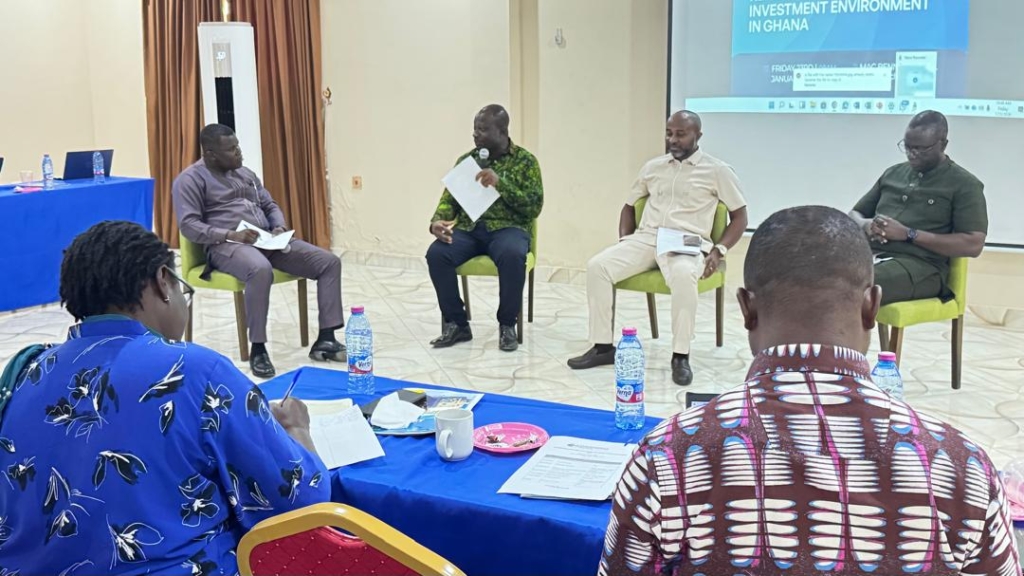
Transparency International held a policy reform multi-stakeholder dialogue aimed at strengthening multi-stakeholder engagement and advocacy for reforms that promote a transparent, accountable and attractive investment climate in Ghana.
It assembled business associations, policy makers, regulatory institutions, private sector actors, and civil society groups.
Addressing the meeting, Executive Director of TIG, Mary Awelana Addah, highlighted some structural gaps negatively impacting foreign investments in Ghana.
“A conducive investment climate is essential for economic growth, job creation and sustainable development, yet, persistent governance gaps – particularly weak regulatory enforcement, limited transparency, cumbersome administrative processes and inconsistent policy implementation- continue to undermine investor confidence in Ghana,” she noted.
Following their assessment, Mrs Addah underscored the need for targeted, coordinated reforms that strengthen accountability, improve public-private sector engagement, and shift the focus from attracting any capital to attracting constructive, value-adding investment that delivers long-term benefits.
“No single institution can resolve systemic governance constraints alone. Civil society, the private sector, policymakers, regulators, and development partners must work collaboratively to identify bottlenecks, align reform priorities, and advocate for policies that ease the cost of doing business while enhancing predictability and investor trust,” she added.
Participants also expressed concerns over the lack of critical measures to protect local businesses while the government works to attract foreign investments.
But Head of the Ghana Investment Promotion Centre (GIPC), Michael Otchere, urged local businesses to harness the benefits of investment policies for their growth.
He admonished the businesses to consider establishing joint companies to enjoy the prospects of the GIPC.
“They should rather join forces to form a company instead of maintaining their sole proprietorship status and take full advantage of the GIPC provisions,” he advised.
About the Author