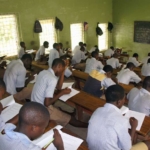
Executive Director of the Institute of Education Studies (IFEST), Dr Peter Anti, has urged policymakers and the public to avoid relying solely on national averages when analysing the sharp decline in the 2025 WASSCE results.
Speaking on JoyNews’ AM Show, Dr Anti said the national statistics released by the West African Examinations Council (WAEC) do not provide the full picture of what went wrong in individual schools across the country.
He explained that meaningful analysis must begin with school-level performance trends, rather than aggregated national figures.
“If we want to understand what is happening, you don’t use the national averages,” he said. “You have to go to the schools and look at their performances over the years, or for that particular year that the exam produced the average. Then you would know which schools performed extremely well or poorly during that period.”
Dr Anti argued that this deeper assessment will help identify the specific institutions that recorded sharp drops in performance and the possible factors behind those declines.
“These drivers are what we need to go into the data and look for,” he added. “We need to identify the individual schools that didn’t perform well this year, and then ask ourselves what really happened. These are policy issues.”
His comments follow WAEC’s release of the provisional results for the 2025 WASSCE, which showed significant declines across several core subjects.
A total of 461,736 candidates from 1,021 schools took the exam, representing a 0.24% increase from the 2024 figure. Another 5,821 candidates, representing 1.26%, were absent.
However, the most worrying trend was in Core Mathematics, where more than half of the candidates — 220,008 students — failed. WAEC described it as the worst Core Mathematics performance in seven years.
Education analysts say the development raises questions about teaching quality, supervision, resources, and student preparedness across many schools.
Dr Anti believes the country risks drawing the wrong conclusions if it does not probe the disparities between schools. He emphasised that policy reforms must be informed by evidence at the school level, not broad national summaries.
About the Author