

Farmers displaced by Newmont Ghana Limited’s Ahafo North mining project have accused the multinational mining giant of systematic human-rights violations, alleging discriminatory and unjust compensation practices that threaten their livelihoods and breach both Ghanaian law and binding agreements.
At a news conference held on Thursday in Terchire, farmers from Afrisipakrom, Susuanso, Terchire, and Adrobaa in the Tano North Municipality announced they had formally petitioned government institutions, regulatory bodies, and international human-rights organizations, demanding urgent intervention.
They warned that peaceful demonstrations will begin within two weeks if their grievances remain unresolved.
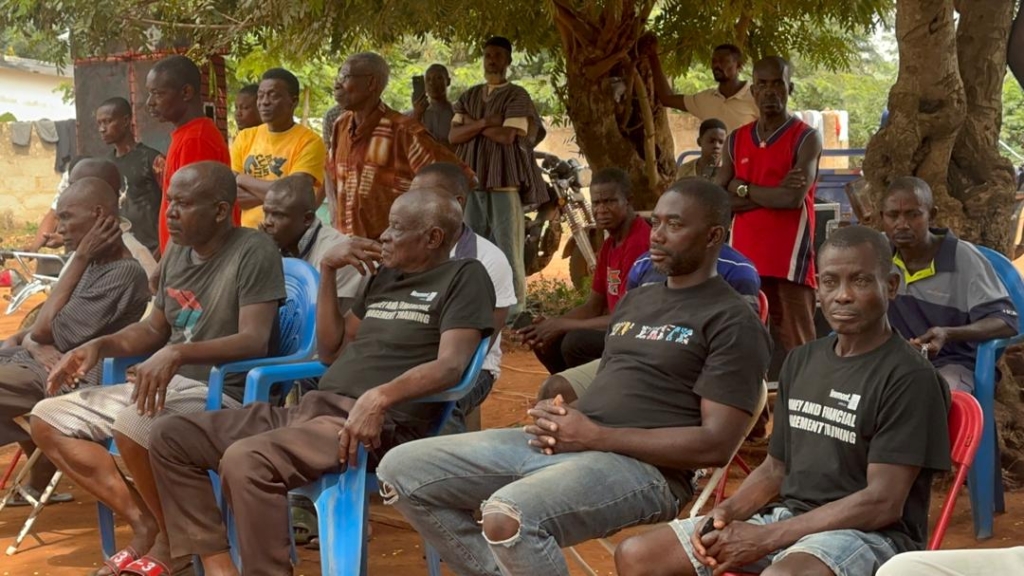
The Ahafo North Project, located at Afrisipakrom, achieved its first gold pour in September 2025, with a projected annual production of 275,000 to 325,000 ounces of gold over the next five years, within an initial 13-year mine life—a major addition to Ghana’s gold output. Yet, beneath the economic promise, affected farmers say the project has delivered economic dislocation, unequal treatment, and broken trust.
According to the farmers, land and crops acquired for the mine were taken under an agreed compensation framework that Newmont itself helped negotiate in 2024. That agreement, they insist, was to be uniformly applied across all affected communities within the concession.
“Same Agreement, Different Payments”
Kofi Owusu Acheaw, one of the aggrieved farmers, told journalists that compensation rates were jointly negotiated and formally signed by all affected communities, including Yamfo, which lies within the same mining concession.
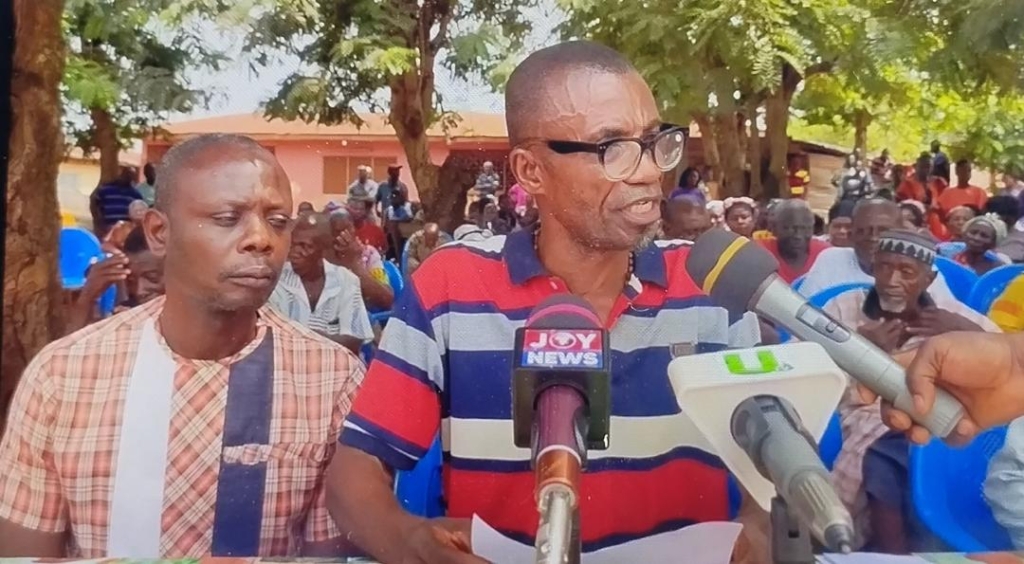
“Based on this collective agreement, compensation was expected to be fair, uniform and consistent across all communities,” he said.
However, he alleged that farmers in Terchire, Afrisipakrom, Susuanso, and Adrobaa were paid significantly less than their counterparts in Yamfo despite operating under the same concession and the same negotiated rates.
“This is unacceptable, unjust, and a clear violation of the agreed compensation framework,” Mr. Acheaw stated.
The farmers argue that Newmont’s actions violate Article 20(2)(a) of Ghana’s 1992 Constitution, which mandates prompt and fair compensation when property is compulsorily acquired in the public interest. They also cited the Minerals and Mining Act, 2006 (Act 703), which obliges mining companies to compensate lawful landowners and occupiers for surface disruption, loss of crops, buildings, structures, and deprivation of land use.
Augustus Mensah, another affected farmer, described the compensation disparity as both unlawful and unethical.
“Newmont Ghana Limited cannot lawfully or morally pay some farmers more and others less under the same agreement,” he said. “This selective implementation amounts to unfair treatment and has caused serious hardship for our people.”
The farmers are demanding that Newmont immediately top up compensation paid to Terchire, Afrisipakrom, Susuanso, and Adrobaa to match exactly what was paid to farmers in Yamfo, in line with the signed rate negotiation agreement. They have petitioned Newmont Ghana Limited, the Minerals Commission, the National House of Chiefs, relevant government agencies, and other stakeholders to intervene. Failure to resolve the matter, they warn, could escalate into broader social unrest.
Industry analysts warn that such disputes can lead to loss of community trust, operational disruptions, permit delays, rising security and legal costs, investor withdrawal, reputational damage, international scrutiny, and resistance in future host countries.
“These issues do not remain local,” Mr. Acheaw stressed. “They follow companies across borders.”
The farmers have escalated their complaint to local and international human-rights organisations, including Building Resilient and Active Communities (BRACE), the African Commission on Human and Peoples’ Rights (ACHPR), Land Rights Defenders Inc, and Amnesty International, seeking independent intervention.
Seventy-nine-year-old landowner Akosua Kyerewaa, speaking emotionally at the press conference, said the struggle was not about confrontation but dignity.
“We remain committed to peaceful engagement and dialogue,” she said. “But we insist on justice, transparency and respect for agreements duly signed.”
JoyNews reached out to Newmont Ghana Limited for its response to the allegations raised by the farmers, but the company declined to comment.
About the Author
