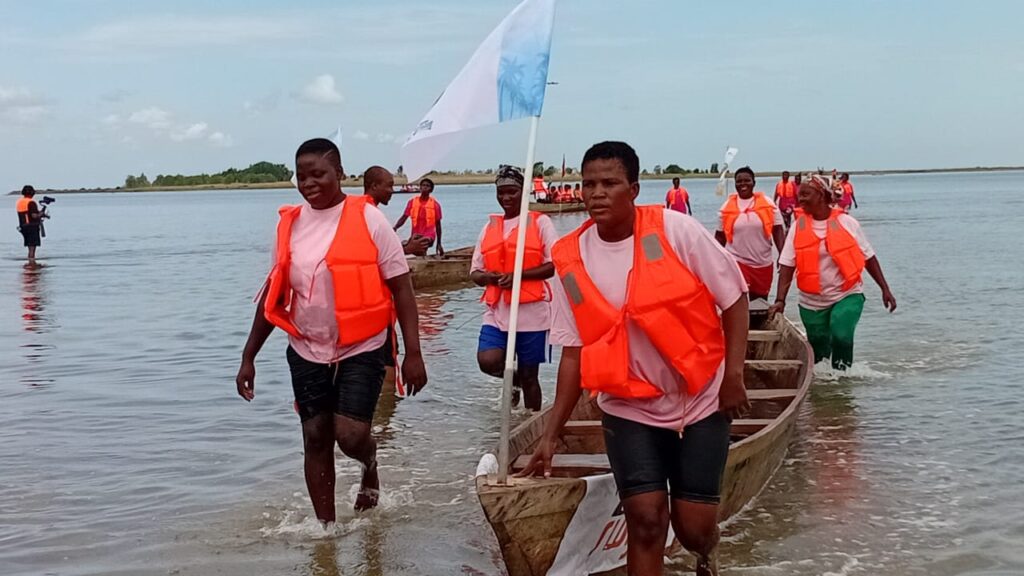

Over 200,000 people, including young people under 20 years from 11 districts in the Northern and Upper East Regions, have been impacted by a project that seeks to empower adolescents and young people to access accurate information on sexual and reproductive health and rights (SRHR).
Implemented by MSI Reproductive Choices Ghana (MSIG) and Youth Advocates Ghana (YAG) with funding from the European Union and support from the Ghana Health Service (GES) and the Ghana Education Service, the three-year project dubbed, Youth For Health, revamped and equipped 26 adolescent corners in the implementing districts.
The revamping and equipping of the corners would enable young people access non-judgmental, right-based sexual health reproductive (SHR) services in those regions without necessarily mingling with adults.
Additionally, the project built the capacity of 240 healthcare providers in youth-friendly services, disability inclusion and gender transformative social behaviour change.
It also built the capacity of 174 teachers across those two regions to enable the integration of SHR topics into their normal school lessons.
It further distributed equipments to some health facilities in the implementing regions and these included autoclave machine, Bp apparatus, examination couch, adult weighing scale, IUD kits, implant kits and instrument drums.
Furthermore, it provided 43,495 implants, 3,446 IUDs and over 240,000 short-term family planning methods which all contributed in averting 24,131 unintended and unplanned pregnancies, 30 maternal deaths, and 8381 unsafe abortion.
These were disclosed by the Programmes Manager of MSIG, Abukari Abdul-Mumin, at the close-out ceremony of the project held in Accra.
Ghana was among six countries namely Ethiopia, Kenya, Tanzania, Zambia and Sierra Leone that implemented the project.
Mr Abdul-Mumin said the project further trained 80 peer educators to educate their peers on accurate SRHR issues so that when their peers approached them, they would be able to provide the right source of information.
He said another 80 were trained as community champions to lead community-level advocacy.
He said they were also able to set up and operate 40 school health and wellness clubs to provide knowledge and skills to young people to make informed decisions about their reproductive health and rights.
Explaining why the two regions were chosen for the project implementation, Mr Abdul-Mumin said even though in Ghana, young people generally faced challenges when it comes to their SRHR, that of the northern part of the country was more profound due to entrenched socio-cultural norms and customs.
“So this was a perfect place to implement this project. Access to health facilities is very limited in the northern part of the country. Young people are not able to openly discuss issues of SRHR with adults in the community and also, in general they are not empowered when it comes to their SRHR and that is why we decided to implement this project in thd northern part of thd country, specifically Northern and Upper East Regions,” he explained.
The Programmes Director of MSIG, Clara Nyarkoa Anim, said through the project more young people had been more informed, confident and more willing to seek services and make responsible choices about their health.
Beyond the individual outcomes, she said the project strengthened health facilities making them more adolescent responsive, schools became more safer space for learning and dialogue and communities became more engaged in supporting young people.
The Executive Director of Youth Advocates Ghana, Emmanuel Ametepey, said over the past three years, they have demonstrated that meaningful adolescent health outcomes were achieved when young people were positioned not as passive recipients but as active agents of change.
The National Coordinator, School Health Education Programme (SHEP) of the GES, Theresa Oppong Mensah, said SHEP recognise that empowering the youth with accurate information and practical skills was vital for building a healthy, resilient and informed generation.
About the Author