
Once upon a time in the Republic of Uncommon Sense…
…the nation woke up to one headline wearing different clothes.
On one news portal, it screamed “Finally! Accountability!”
On another, it whispered “Political Witch-Hunt!”
On social media, it shouted “We told you!”,
“We warned you!”, and
“Leave my uncle alone!”—sometimes all under the same post.
Phones vibrated like election night. Breakfast went cold. The story of
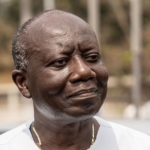
Ken Ofori-Atta had returned, this time carrying a passport stamp.
In the Republic of Uncommon Sense, news does not break. It argues.
Long before the foreign arrest, there was a summons. A very polite summons.
It knocked gently, believing in good manners and due process.
It was sent, resent, acknowledged, and explained to.
Each time, it nodded respectfully and sat down again.
Over time, the summons stopped being an instruction and became a visitor.
Familiar. Harmless. Almost decorative.
In the corridors of authority, calm voices reassured the nation.
Everything was under review. Processes were ongoing.
Appropriate steps were being followed.
The language was correct. The tone was mature.
The urgency, however, was on study leave.
Meanwhile, the Republic was watching. Quietly at first. Then with folded arms.
At the public square, opinions began forming—not loudly, but confidently.
A market woman said, “I don’t understand law, but I understand delay.”
A taxi driver added, “If this was trotro, the mate would have shouted by now.”
A student concluded, “Sir, is accountability available in local edition or only international version?”
Then the story travelled.
Suddenly, there were no polite letters. No patient explanations. No extended reviews.
There was movement. Abroad. Swift. Unmistakable.
And the Republic laughed—not with joy, but with that awkward laughter people make when reality trips over irony.
That was when the arguments truly began.
From one side of the political divide came confident nods and measured smiles.
“You see,” they said, “nobody is above the law.”
This, they argued, was proof of seriousness. Evidence that the system works—
even if it occasionally needs international assistance.
Their tone suggested referees after the final whistle: calm, authoritative, satisfied with the outcome.
From the other side came raised eyebrows and long memories.
“Why now?” they asked. “Why him?” “Why this method?”
They spoke of selective justice, political persecution, and convenient timing.
Their arguments came with historical footnotes and old clips replayed in slow motion.
To them, this was not justice—it was theatre, with foreign lighting.
The Republic, of course, chose sides immediately.
In Ghana, facts are not debated before alignment. Alignment comes first;
facts follow when convenient. Once you pick a camp, every headline becomes evidence
and every silence becomes suspicious.
On social media—the loudest parliament of them all—due process was cancelled
for lack of patience. X delivered instant verdicts in 280 characters.
Facebook produced essays in capital letters. WhatsApp, as usual,
provided voice notes with background traffic, sirens, and absolutely no sources.
By the time any court sits, the Republic has already tried the case,
adjourned it, appealed it, and blamed the economy.
Still, beneath the noise, one uncomfortable question refused to go away:
why did accountability look so careful at home and so decisive abroad?
This was not about declaring guilt. It was about optics.
And optics, in the Republic of Uncommon Sense, are stronger than affidavits.
At home, authority had been patient, procedural, and endlessly explanatory.
Abroad, authority appeared firm, immediate, and very sure of itself.
The contrast was not legal; it was visual. And in a country where perception
often outruns paperwork, that contrast taught its own lesson.
Even those cheering paused briefly. Even those protesting fell silent for a moment.
Because when the house owner delays, the rain chooses its own doorway.
And once the rain enters, explanations must mop the floor.
The elders of the Republic, those who speak softly but observe sharply, shook their heads.
They did not shout. They did not clap. They simply reminded us that
the one who keeps sharpening the knife without cutting will be doubted, not praised.
Process is important, yes—but process must eventually arrive somewhere.
In the end, the Republic realised it was not watching one man’s story.
It was watching itself. Its institutions. Its patience. Its habit of mistaking
politeness for power and explanations for conclusions.
Justice, the elders say, does not fail because it is slow.
It fails when it looks unsure. And when uncertainty stays too long,
someone else will demonstrate what urgency looks like—without asking permission.
So the tale continues, flowing like the Volta: calm on the surface, heavy underneath.
The camps will argue. The portals will frame. The public square will shout.
And the Republic of Uncommon Sense will do what it does best—laugh first, think later,
and remember forever.
The story pauses here. The debate, as always, does not.
About the Author
