
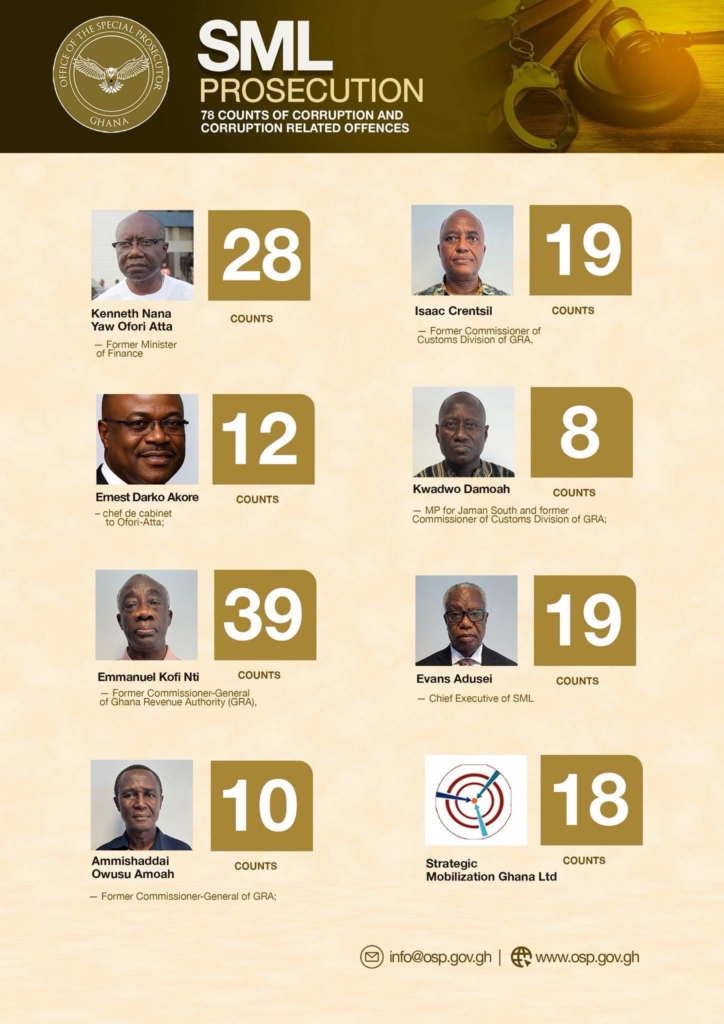
The long-awaited prosecution of former Finance Minister Ken Ofori-Atta and seven others formally begins in court today, Thursday, December 11, following the filing of a 78-count indictment alleging corruption and financial loss to the state.
The Office of the Special Prosecutor (OSP) announced this on its official social media page.
“The trial of Kenneth Ofori-Atta and 7 others expected to start today at Criminal Court 5” the OSP said.
The trial follows the prosecution’s filing of charges in November 2025, accusing Ofori-Atta and co-accused persons of corruption and corruption-related offences tied primarily to the Strategic Mobilisation Ghana Limited (SML) contracts and related public procurement matters.
According to the prosecution’s case documents, the eight accused, including Ernest Darko Akore, Emmanuel Kofi Nti, Ammishaddai Owusu-Amoah, Isaac Crentsil, Kwadwo Damoah, Evans Adusei, and Strategic Mobilisation Ghana Limited itself, are alleged to have caused significant financial loss to the state through unlawful payments, procurement breaches, and other infractions during government contracts between 2018 and 2024.
The OSP has said that it has taken all necessary legal steps to initiate proceedings and that the matter will be dealt with in line with Ghana’s legal framework.
It also stressed that accusations of impropriety in how the prosecution has been handled, including claims that the trial is being rushed, are unfounded.
The office said it remains focused on securing the presence of accused persons and protecting their constitutional rights.
While some of the accused, including Mr Ofori-Atta, are currently outside Ghana and have cited health reasons for their absence, the OSP noted it has applied appropriate legal mechanisms, including summons and cooperation with international law enforcement where applicable, to ensure appearances as required by law.
The matter is expected to be closely watched across the country, coming at a moment of heightened debate about the future of the OSP itself, with calls from civil society and parts of Parliament either to strengthen or scrap the anti-corruption institution.
About the Author