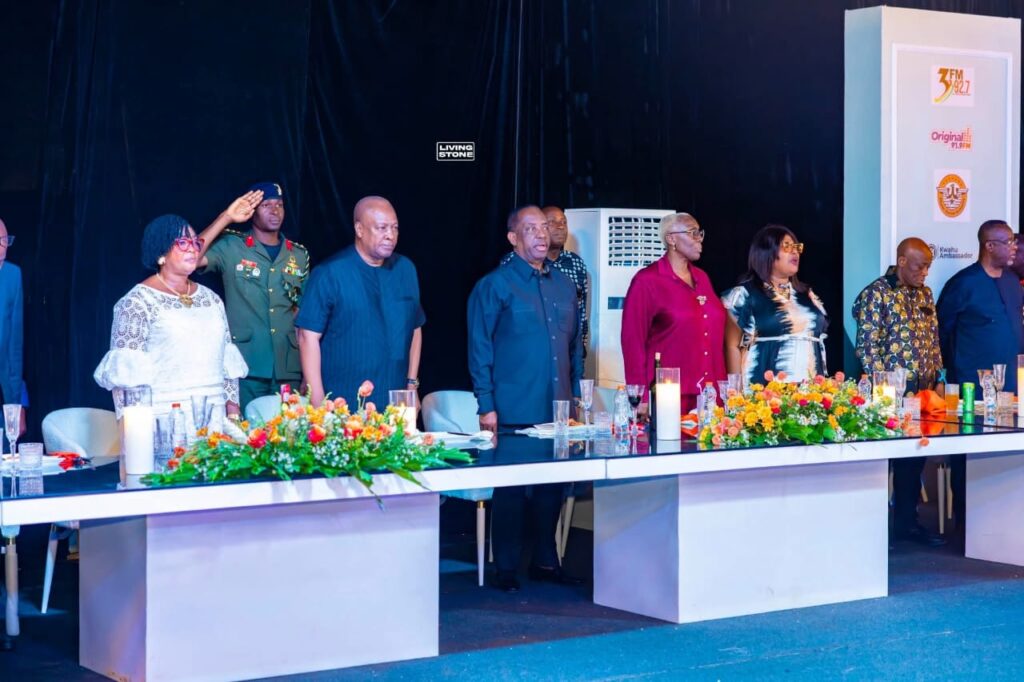

On 7 January 2025, President John Dramani Mahama was sworn into office following a decisive mandate from the Ghanaian people in the 2024 Presidential and Parliamentary Elections. One year on, the question is no longer whether the government has settled into office, but whether it has meaningfully reset the tone, direction, and credibility of governance in Ghana.
From the vantage point of the Presidency—having worked closely with President Mahama since 2017, first as Office Administrator and now as Secretary to the President, and having engaged deeply with the National Democratic Congress from the national level down to constituencies—I have observed this first year not as a spectator, but as a participant in the daily discipline of leadership. What has emerged over the past twelve months is a governing style that privileges seriousness over spectacle, substance over slogans, and trust over theatrics.
Independent public opinion data now lends empirical weight to this lived experience. According to the December 2025 National Tracking Poll, 66 per cent of Ghanaians believe the country is headed in the right direction, with this positive assessment recorded across all regions. Only 24 per cent think otherwise, while 10 per cent expressed no opinion. In a politically diverse society, such convergence is neither incidental nor routine.
A government that chose repair before applause
An unglamorous but necessary priority has defined the first year of President Mahama’s administration: stabilisation. In contrast to past approaches that relied heavily on optimistic rhetoric, this government confronted economic reality early and honestly. Debt restructuring was completed not as a public relations exercise, but as a prerequisite for national recovery. Fiscal discipline was re-established as policy, not posture.
This shift mattered. It signalled to citizens, investors, development partners, and civil society that Ghana was ready to replace denial with data, and spin with realism. The government’s credibility has rested not on promises of instant relief, but on transparent communication about constraints, trade-offs, and timelines.
Public sentiment reflects this realism. The poll shows that 66 per cent of respondents are satisfied with the 2026 Budget, while 56 per cent report that their standard of living has improved compared to a year earlier. Even more telling, 70 per cent are optimistic that their living conditions will improve in the coming year. Confidence, once badly eroded, is being rebuilt through candour.
Leadership performance and national confidence
Approval of the President’s performance remains strong and geographically broad-based. The poll records a 67 per cent job approval rating, unchanged from the previous quarter, with majorities approving in all regions, including traditionally opposition-aligned areas. Among floating voters, approval stands at 69 per cent, underscoring confidence across partisan lines.
This is not the result of dramatic gestures or headline-driven governance. Instead, it reflects consistency in leadership, clarity of intent, and visible seriousness in delivery during the administration’s first year.
Speeches as Instruments of Governance, Not Performance
One underappreciated feature of this first year has been the role of presidential communication. The many speeches delivered—State addresses, policy launches, international forums, regional engagements—were not ceremonial fillers. They were instruments of governance.
Across these interventions ran consistent threads: accountability, institutional reform, social equity, economic sovereignty, and national cohesion. The President did not speak differently to different audiences; what he said at home aligned with what he said abroad. What he told Parliament resonated with what he told civil society. This coherence reinforced trust. Citizens could trace policy intent from words to action.
In an era where political speech often aims to impress, President Mahama’s speeches aimed to explain, persuade, and, when necessary, caution. That restraint has proven to be a strength.
Governance, integrity, and the fight against corruption
On governance and accountability, public opinion points to a gradual restoration of confidence. Fifty-six per cent of respondents believe corruption has improved, while 60 per cent say the government is doing enough to fight corruption, an improvement over the previous quarter
These perceptions matter. They suggest that institutional reforms, respect for oversight bodies, and a renewed emphasis on accountability are being noticed by citizens—not through slogans, but through observable shifts in practice.
Environmental protection and the galamsey question
The poll also challenges prevailing narratives on illegal mining. Contrary to claims of deterioration, only 37 per cent of respondents believe galamsey has worsened, while 47 per cent disagree. Furthermore, 56 per cent believe the government is doing enough to combat the menace, including in mining-affected regions.
This indicates public recognition of a more structured, enforcement-driven, and coordinated approach to environmental protection.
International experience applied, not advertised
President Mahama’s extensive international experience—acquired through years of diplomatic engagement and multilateral leadership—has quietly shaped governance decisions in this first year. Rather than importing fashionable reforms wholesale, the administration has adapted best practices to local realities.
Engagements with international financial institutions and development partners have been marked by firmness without hostility, cooperation without dependency. Ghana has re-entered the global arena as a serious interlocutor, not a supplicant—earning respect through clarity and consistency.
Civil society, democratic dialogue, and constitutional renewal
Perhaps one of the most telling shifts has been the government’s relationship with civil society. Critics have not been dismissed; they have been engaged. Oversight institutions have been allowed to function. Public losses have been acknowledged, not obscured.
This openness extends to constitutional reform. The poll shows majority support for key proposals, including:
• Election of MMDCEs (63%)
• Separation of ministerial and parliamentary roles (58%)
• Extension of the presidential term to five years (57%)
• Reduction of the presidential age threshold (56%)
• Abolition of the death penalty (59%)
• Restriction of political campaigns to 120 days (57%)
These figures suggest a public appetite for profound democratic renewal and institutional strengthening.
A generational mandate
The demographic signal is equally striking. Gen Z and Millennial voters now constitute nearly 78 per cent of the electorate, with 64 per cent expressing a preference for younger leadership. This reinforces the importance of forward-looking policies anchored in opportunity, inclusion, and long-term national transformation.
Goodwill earned, not inherited
One year on, the goodwill enjoyed by President Mahama’s government is not partisan, accidental, or manufactured. It has been earned through transparency, accountability, consistency, and seriousness of purpose.
The work ahead remains demanding. Structural reform is never completed in a single year. But the foundation laid over the past twelve months suggests a presidency focused not on managing news cycles, but on rebuilding the state.
History will ultimately judge this administration on outcomes. Yet even at this early stage, one conclusion is clear: Ghana is once again being governed with intent, integrity, and a steady hand.
About the Author