
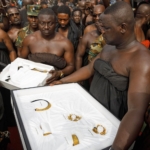
The Kingdom of the Netherlands has formally handed over an inventory of Ghanaian cultural artefacts held in Dutch collections, marking a major step toward the restitution of objects looted during the colonial era.
The inventory, compiled by the World Museum in Leiden, was presented in both digital and printed formats during high-level bilateral talks in Accra between Ghana’s Minister for Tourism, Culture and Creative Arts, Abla Dzifa Gomashie, and a Netherlands delegation led by Ambassador Jeroen Verheul.
The document is expected to aid Ghana in identifying artefacts of historical and cultural significance and to support the submission of formal restitution requests, representing a concrete advance in the country’s reparative justice efforts.
Speaking at the meeting, Minister for Tourism, Culture and Creative Arts, Abla Dzifa Gomashie described the handover as a practical and meaningful step toward historical justice, noting that it aligns with Ghana’s broader reparations agenda being championed by President John Dramani Mahama in his role as the African Union’s Special Envoy on Reparations.
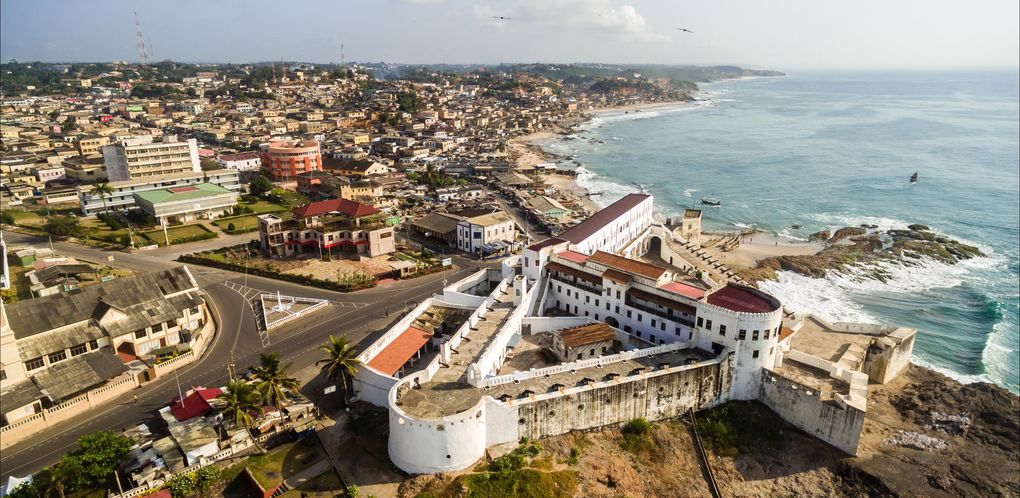
Beyond the return of artefacts, discussions also focused on the preservation of Ghana’s forts and castles, including Fort Prinzenstein. Both sides acknowledged a shared international responsibility to protect the sites, with UNESCO-supported mechanisms identified as a key avenue for conservation.
The talks further explored opportunities for cooperation in Ghana’s creative economy. The Minister highlighted the need for investment, skills development and institutional partnerships to unlock the sector’s economic potential, adding that litigation-free land has been made available to attract investors.
Ambassador Verheul reaffirmed the Netherlands’ commitment to returning cultural objects acquired through force or coercion, following formal requests and joint provenance research by Ghanaian and Dutch experts.
He said decisions on restitution are guided by an independent restitution committee. He also confirmed that Ghana has been designated a focus country for Netherlands cultural cooperation, supported by a structured programme and dedicated funding in place since 2024.
For countries such as Ghana, inventories of this nature provide a critical basis for identifying artefacts taken during colonial rule, warfare or coercive transactions, and for establishing evidence-based claims for their return.
Officials present at the meeting included Deputy Minister for Tourism, Culture and Creative Arts, Youssif Issaka Jajah; Director for Culture and Creative Arts, Divine Owusu Ansah; and Director of Policy Planning, Monitoring and Evaluation, Dr Alphonse Kumaza.
The meeting concluded with the formal handover of the artefact inventory, reaffirming both countries’ commitment to restitution, cultural cooperation and sustainable development.
The development comes amid growing calls across Africa for the return of cultural artefacts removed during the colonial period. Countries including Nigeria, Benin, Ethiopia and Senegal have stepped up efforts to recover looted objects from European museums, as several European states including Germany, France and the Netherlands adopt formal restitution frameworks aimed at addressing historical injustices.
About the Author
