
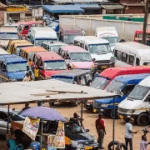
The Concerned Drivers Association of Ghana is calling on Metropolitan, Municipal, and District Chief Executives (MMDCEs) to take action against drivers and mates charging unapproved fares.
Passengers have recently raised concerns about being overcharged by some commercial drivers and their conductors.
Information gathered by Nhyira FM indicates that some drivers pick up passengers from lorry terminals, drop them mid-route, and charge extra fares.
Speaking on Nhyira FM’s “Kro Yi Mu Nsem”, hosted by Barima Kofi Dawson, the Public Relations Officer for the Concerned Drivers Association, David Agboado, stated that the leadership of various transport unions does not support the unapproved fares.
He blamed the behaviour on commercial vehicle (trotro) owners who are not registered with any recognised transport unions, saying they’re operating illegally.
“Most of these trotro vehicles don’t belong to any transport unions, which is why they’re misbehaving,” Mr Agboado said.
He emphasised that registration with recognised transport unions is mandatory for commercial vehicles to operate legally, citing Regulation 121 of Legislative Instrument 2180 (2012).
He pointed out that the LI states that “A person shall not operate a commercial vehicle unless that person holds a road transport operator’s licence” and “A person shall not operate as a commercial vehicle driver unless that person is employed by or belongs to a recognised commercial road transport organisation.”
He questioned why authorities are not enforcing the law effectively.
He therefore calls on Metropolitan, Municipal, and District Chief Executives (MMDCEs) to deploy task forces to crack down on drivers and mates charging passengers unauthorised fares.
“What they’re doing is a crime, so I am urging the MMDCEs to allow their task forces to continue to beat those drivers and their mates overcharging passengers. This will let them desist from auctions.”
The association is also pointing to the high cost of spare parts and maintenance as a major contributor to the current transport crisis.
According to Mr Agboado, 40-45% of commercial vehicles are currently in workshops, exacerbating the shortage.
About the Author
