
The Ministry of Lands and Natural Resources says it is on track to meet its 2025 target of restoring degraded forest reserves.
By the end of October, more than 26 million seedlings had been planted after the government reclaimed nine red-zoned forest reserves that had been seized and controlled by armed groups.
The Minister Emmanuel Armah-Buah, in a speech, highlighted that government policies are beginning to show results.
“The work of the National Anti-Illegal Mining Operations Secretariat (NAIMOS) and the Rapid Response Team from the Forestry Commission is beginning to bite hard on those perpetrating these crimes against our nation,” he said.
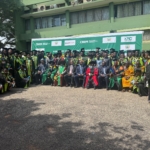
The remarks were delivered by Prof. Jerry Samuel Yaw Kuma on behalf of the Minister at the first graduation ceremony of the Certificate in Natural Resources Management program at the Forestry Commission Training Centre in Akyawkrom.
Natural resources remain central to Ghana’s development, with many families relying on them for survival. Yet illegal mining and harmful environmental practices continue to degrade forests and other ecosystems.
According to the Minister’s speech, read by Prof. Jerry Samuel Yaw Kuma, a recent report revealed that between 2020 and 2024, 89,998 hectares of arable land, including forest reserves, representing 9.14% of the total, were irreversibly destroyed.
Projections show another 35,000 hectares could be lost by 2027, raising the proportion of destroyed farmland to 12.7%.
The Minister warned of dire consequences: “Food production will decline by 25–30% over the next three years. Cocoa production has already dropped from 1.04 million tonnes in the 2020/21 season to 531,000 tonnes in 2023/24, a reduction of 48.9%.”
Training Natural Resource Personnel
The Forestry Commission has long struggled to recruit forest technicians following the closure of its training school in Sunyani.
To bridge the gap, the Commission partnered with the University of Energy and Natural Resources to launch a new program in 2024. The first intake admitted 67 students.
Acting Director of the Forestry Commission Training Centre (FCTC), Richard Kuutah Ninnoni, said the institution is equipping students with the skills needed to support reforestation.
“We expect you to exhibit excellence at work because you have been taught by the best,” he told graduates.
The second batch admitted 81 students, with about 80% of tuition costs subsidised by the Commission.
The Ministry expects graduates to play a vital role in restoring Ghana’s forests.
“This graduation ceremony shows that the Forestry Commission is determined to support government efforts to curb forest and wildlife degradation with quality human resources,” the Minister’s speech concluded.
About the Author