
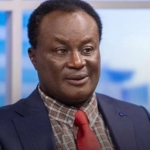
A development historian and legal practitioner, Dr Yaw Anokye Frimpong, has renewed calls for reparations and the return of Africa’s looted cultural heritage, urging stronger unity among African leaders to advance the cause.
Speaking in an interview on Angel Radio, Dr Frimpong commended former President John Dramani Mahama for consistently placing the issue of reparations on the international agenda, describing the stance as timely and strategic.
He said the advocacy is particularly significant as European countries increasingly acknowledge their roles in the trans-Atlantic slave trade.
Dr Frimpong noted that Mr Mahama stands out among African leaders for boldly raising the reparations debate, an effort he said contributed to the African Union establishing a dedicated department to address the issue.
According to him, Africa’s demands for reparations will remain weak without a coordinated continental approach, stressing that historical disunity played a major role in the atrocities suffered during slavery and colonisation.
He urged Africans on the continent and in the diaspora to unite and collectively pursue justice for centuries of exploitation, noting that the conversation has been reignited by the widely discussed documentary From Slaves to Bond, which continues to attract significant attention online.
Dr Frimpong said Europe has begun to acknowledge the scale of Africa’s exploitation, describing the 350-year slave trade as one of the longest and most brutal episodes of forced human displacement in global history.
“The continent was plundered for centuries, and that reality is now being admitted,” he said, adding that Africa must seize the moment by speaking with a unified voice.
He observed that Africa’s fragmentation continues to weaken its collective bargaining power, making it easier for external actors to exploit the continent’s resources and cultural heritage.
“The ease with which what belongs to us was taken stems largely from our divisions. Unity is non-negotiable if Africa is to move forward,” he said.
Dr Frimpong also highlighted the importance of strengthening ties with Africans in the diaspora, pointing to global figures such as Mike Tyson and Muhammad Ali as examples of how shared identity transcends national borders and can be leveraged to amplify Africa’s voice globally.
He further encouraged African leaders to draw lessons from institutions such as the United Nations, which was established after the Second World War to promote unity and prevent future conflicts among nations.
Beyond reparations, Dr Frimpong welcomed the growing production of documentaries on slavery and colonial theft, saying they provide African nations with an opportunity to challenge long-standing narratives and ensure historical accuracy.
He cited recent successes in the return of stolen artefacts to the Asante Kingdom as evidence of progress.
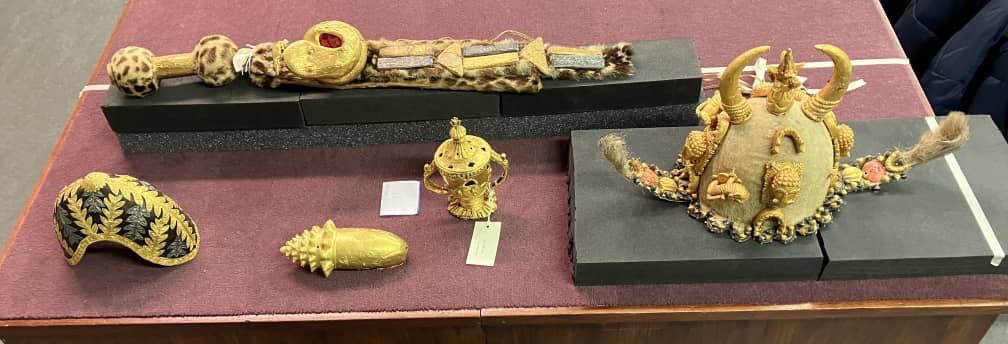
In November 2025, the Asantehene, Otumfuo Osei Tutu II, received 130 gold and bronze artefacts from the United Kingdom and South Africa. Some of the items were looted during colonial rule, while others were acquired through the open market.
The artefacts, dating back to the 1870s, include royal regalia, ceremonial gold weights and traditional drums, reflecting the central role of gold in Asante culture.
Many of the items were taken during a series of conflicts between British forces and the Asante Kingdom in the late 19th century, known as the Anglo-Asante wars, during which the Asantehene’s palace was looted twice.
Despite these gains, Dr Frimpong noted that many African artefacts remain abroad on loan rather than being permanently returned.
In 2024, 32 looted artefacts were displayed at the Manhyia Palace Museum under a three-year loan agreement involving the Victoria and Albert Museum, the British Museum and the Asante king.
He also referenced Germany’s 2022 decision to return the Benin Bronzes to Nigeria, marking the first major restitution of the artefacts looted by British troops in 1897 from the Kingdom of Benin in present-day Edo State.
Dr Frimpong said these developments signal a shift in global attitudes but insisted that sustained pressure and African unity are essential to securing lasting justice.
About the Author
