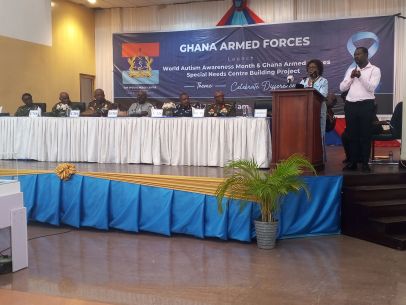
The Ghana Armed Forces (GAF) has launched the 2026 World Autism Awareness Month alongside a Special Needs Centre Building Project to promote inclusion, early intervention and support for persons on the autism spectrum.
The event, held at Burma Camp on Thursday, April 2, was on the theme: “Celebrate Differences.”
It aimed at addressing gaps in diagnosis, care, and education for children with developmental conditions.
Chairman of Albert’s Haven Autism Foundation and Guest of Honour, Mr Ato Brown, said that autism should not be viewed as a limitation but as a different way of experiencing the world.
He said individuals on the autism spectrum possessed unique abilities such as strong pattern recognition, attention to detail and creativity, which could contribute to national development if properly harnessed.
“In some advanced countries, including within defence institutions, persons with autism are contributing to cybersecurity, intelligence analysis and software development,” he said.
Mr Brown described the construction of the GAF Special Needs Centre as a “bold and compassionate initiative” that would provide specialised care, therapy and education for children with developmental challenges.
He urged stakeholders to move beyond awareness to acceptance and action by creating systems that supported affected individuals and their families.
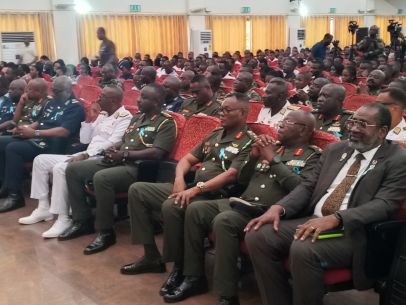
Group Captain (Dr) Rosa Asiedu, a senior Air Force Officer, shared her experience as a parent of a child living with autism, highlighting the emotional, social and financial challenges faced by families.
She said early signs such as limited eye contact, delayed communication and difficulty interacting with peers were initially dismissed as normal developmental variation.
Gp. Capt. Asiedu noted that access to specialised care and education remained a major challenge, with therapy and alternative schooling often expensive and inaccessible.
She described the experience as “frustrating,” citing sleep deprivation, health complications and the constant need for supervision, and expressed the view that the proposed centre would provide relief to affected families.
A neurological specialist, Dr Erica Dickson, said delayed diagnosis remained a major challenge in Ghana.
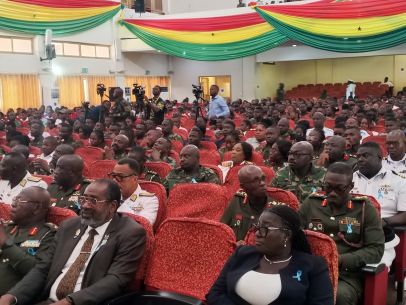
She said children were often diagnosed between the ages of eight and nine, compared to about two to four years in many developed countries.
“Many people still do not understand autism and often attach negative labels to affected children. This must change,” she said.
Dr Dickson attributed the delays to low awareness, stigma and misconceptions, including the tendency to spiritualise the condition.
She also identified inadequate human resource capacity, limited specialised services, and weak support systems as key challenges.
Dr Dickson called for improved public education, early screening, increased funding and effective implementation of inclusive education policies.
She urged society to focus on the strengths of people with autism.
Air Vice Marshal Joshua Lartei Mensah-Larkai, Chief of Staff, said the initiative formed part of efforts to promote understanding, acceptance and support for persons with developmental conditions.
“The facility will serve as a safe and nurturing environment where children with special needs can receive professional developmental support, while also providing guidance for parents and caregivers,” he noted.
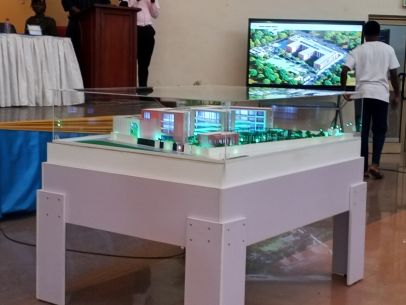
AVM Mensah-Larkai said the proposed centre would provide services including speech and language therapy, occupational therapy, behavioural interventions, and psychological support.
He emphasised the need for stronger collaboration among institutions, professionals, and communities to build an inclusive society.
Autism Spectrum Disorder (ASD) is a neurodevelopmental condition characterised by challenges in communication, social interaction and behaviour.
The World Health Organization estimates that about one in every 100 children globally has autism, although prevalence varies due to differences in awareness and diagnostic capacity.
In Ghana, available data is limited, but increasing reports suggest a rise in cases, compounded by late diagnosis, stigma and inadequate specialised services.
The Special Needs Centre Project is expected to help improve early intervention, education and care, while promoting awareness and inclusion.
About the Author