

There is a famous story from a medical school, told by the Brazilian humourist, Aparicio Torelly Aporelly, the Baron of Itararé. A professor, eager to trip up a student, asked a simple question. “How many kidneys do we have?” “Four,” the student replied. The professor sneered, ordered grass to be brought for the donkey in the room, and prepared his moment of triumph. The student did not blink. “You asked how many we have,” he said. “Two are mine and two are yours. We is a plural.”
We often run into the same linguistic trap in national economic debate. When the state speaks of “the economy,” it is often looking at the two kidneys on its own clinical chart: the fiscal deficit and the inflation rate. By those measures, the government’s work in the last twelve months has been surgical and successful. They have steadied a patient that was trembling on the table, bringing a level of discipline to the books that deserves genuine recognition. Away from the political spin, the clinical reality is that the economy’s fever has broken. The question now is how quickly that health reaches the rest of the body.
But the student’s point still stands.
“We” is a plural.
Recovery isn’t a single data point, and it doesn’t happen on a single set of lungs. To be more than just a headline, the stability has to actually move. It has to be processed by the other ‘kidneys’ in the room: the household and the firm. Macro-stability is just a successful surgery; it’s a clinical win that doesn’t mean much until the patient is back on their feet. The real test isn’t the central bank’s spreadsheet; it’s the microeconomics of the kitchen table. That is where the macro-elixir either proves its worth or reveals itself as a placebo.
It shows up first in rent and transport fares less volatile, less panicked. And eventually, in whether a trader can restock without surrendering her margin; in whether a small manufacturer can price, plan and survive without holding their breath.

The government has repaired the overhead machinery. That is not a small thing. But now the proving ground shifts from the ledger to the street. The stall. The factory floor. This is where macro stability is cashed out as micro relief. This is where we learn if the medicine has actually hit the bloodstream, or if we’re just looking at a ghost in the machine.
In my usual metaphorical lexicon, I’ll put it this way;
“This is the only proving ground that matters. This is where policy elixirs are metabolized, and where placebos are exposed.”
The Macro Recovery
Ghana’s headline data is finally starting to hum. After years of noise and discord, the numbers are beginning to align into a steady, recognizable rhythm. In 2024, Ghana’s economy began to regain its rhythm, with quarterly data showing industry especially manufacturing leading the rebound, growing 10.4 %, while services rose 6.4 % and agriculture 3.2 %, indicating a body slowly shaking off the malaise of prior years. By 2025, the recovery had entered a sturdier phase as overall real Gross Domestic Product (GDP) grew 5.5 % in Q3, with services expanding 7.6 % and agriculture surging 8.6 %. Industry grew more modestly at 0.8 % due to weak oil and gas output, though manufacturing held up within the sector. If the economy were a patient, 2025 was the year the vital signs stabilized, the fever of instability cooled and output began to beat with steady confidence, guided by careful fiscal and monetary care.

Inflation, the wild drumbeat that once drowned every signal, has been tamed. After peaking above 50% in late 2022 and easing through 2023 and 2024, it continued its steady descent in 2025, reaching 6.3% in November and then 5.4% in December, the lowest annual rate recorded since the Consumer Price Index (CPI) was rebased in 2021. Underlying price pressures moderated alongside headline inflation, providing space for the Bank of Ghana’s (BoG) Monetary Policy Committee (MPC) to ease policy; the policy rate was cut sharply through the year, including a 300 basis points (bps) reduction to 25% in July and further cuts to 21.5% in September and ultimately 18% by November. It was a clear green light from the central bank, fuelled by cooling inflation and a newfound grip on macro stability. As these decisions worked their way through the system, commercial lending rates descended into the low‑20s, domestic credit began to expand again, and the patient’s vital signs settled into calmer rhythms. In 2025, this shift from crisis to control demonstrated deliberate policy choices by the new monetary authorities, whose actions helped stabilize prices while supporting economic growth.
From where I sit as an economist, stripped of any political mist, the government’s work here has been surgical. They have steadied a patient that was trembling on the table, bringing a level of discipline to the books that deserves recognition. Public finances steadied on twin struts: a landmark $2.8 billion debt restructuring with the Official Creditor Committee (25 nations) in Q1 2025, slashing Eurobond costs by $1.2 billion annually. Paired with the International Monetary Fund’s (IMF) $3 billion Extended Credit Facility (ECF, 5th review December, 2025 triggering the release of $385m; approximately $2.8bn total disbursed), this trimmed the fiscal deficit to 1.1% of GDP in H1 2025 (from 11.1% in 2022), boosted gross international reserves to $13.8 billion (nearly 6 months of imports) by year-end, and stabilized the Ghana Cedis at around GH₵11.1/$ interbank.
Ghana’s external position improved steadily over 2024 and into 2025, as higher export receipts and stable remittance inflows supported a shift in the current account into surplus. Gold exports were the principal contributor, with cumulative receipts exceeding US$11 billion by 2025, while cocoa earnings recovered following earlier declines. These developments translated into a widening trade surplus and sustained foreign exchange inflows, supporting reserve accumulation and easing external financing pressures.
Provisional trade data indicate that the cumulative trade surplus reached approximately US$8.5 billion by late 2025, exceeding earlier projections. The outcome was powered by a surge in gold exports and a cooling of imports, a direct byproduct of fiscal tightening alongside steady gains in non-traditional sectors. Compared with the persistent external deficits recorded in preceding years, this represented a notable improvement in Ghana’s external balance and overall resilience.
In short, the macro score now resembles a turnaround stronger than skeptics expected, though still sensitive to commodity prices and election-cycle pressures, with growth reclaiming pre-crisis form (above the Sub-Saharan average of 4% to 5%), inflation easing toward the BoG target of 6% ± 2%, market confidence surging (GSE Composite Index +70% YTD to >8,400), and buffers fortifying against shocks.
But here is the pivot: macro success is the invitation, while micro adoption is the arrival. Breaking the fever is a medical victory, certainly, but the patient still has to find the strength to walk.
Micro Adjustment Catching Up with Macro Repair
A macro-fix is only as good as its metabolism. It counts for little if it doesn’t change the decision-making at the firm and household level. In Ghana, we are finally seeing that absorption happen, with the trend hardening as we move into 2026.
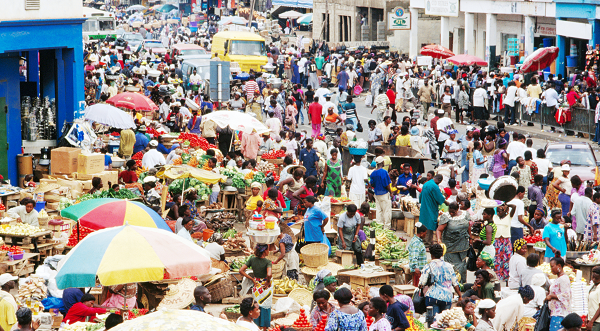
Start with the most unforgiving price in the economy, the price of money. In 2022, average lending rates above 42% (peaking at 48% amid 54% inflation) functioned less like interest rates and more like stop signs. Investment froze, balance sheets curled inward, and survival displaced ambition. That era is closing decisively. By mid-2025, weighted average lending rates retreated to 17.2% (from 32% in 2023), settling in a 15% to 18% corridor by Q4, restoring arithmetic viability to working capital, inventory financing, and even medium-term capex like equipment upgrades. The 22.4% surge in private credit is the first real sign that the recovery is being metabolized. With SMEs snapping up 28% of those new loans, we are seeing a shift driven by necessity rather than benevolence. Banks aren’t lending to small businesses out of the goodness of their hearts; they are doing it because the macro-cleanup has dried up the ‘easy’ money in government bonds, making the real economy the only attractive game in town. It is arithmetic and arithmetic is finally sane again. It is simply the math of a restored order. With a policy rate of 18% against inflation of 5.4%, real policy rates have turned decisively positive, exceeding 12% on an ex-post basis. It is this positive spread that finally allows the ‘kidneys’ of the private sector to begin filtering credit back into the system.
Households feel the shift from macro stability viscerally. Inflation no longer rages through kitchens and trotro fares as it did during the high‑pressure years, when food price inflation pushed many families to the brink. By late 2025, headline inflation had eased to 5.4 %, and food inflation slowed sharply to 4.9 %, taking pressure off staple items and everyday costs. Mobile money platforms have become a central artery of transactions, with total mobile money flows rising from around GH¢3.01 trillion in 2024 to approximately GH¢3.6 trillion by October 2025, showing growing confidence and increased digital economic activity. Meanwhile, softened price pressures and more predictable costs have helped households rationalize spending and manage liquidity in ways that simply weren’t possible during the worst of the inflation surge.
At the firm level, emerging indicators point to incremental gains. Purchasing Managers’ Index (PMI) data above expansion thresholds in late 2025 suggest businesses are cautiously rebuilding inventories and increasing orders, a tentative sign that private sector activity is gaining rhythm. Traders have eased the frequency of price adjustments amid disinflation, moving from reactive weekly tweaks to more measured monthly cycles, while SMEs are gradually re-engaging suppliers and restoring operational linkages. These subtle shifts signal that macro stability is slowly permeating everyday business decisions, even as the pace of recovery remains uneven.
Sentiment across food processing and textiles points to a genuine output stir, even if the final 2025 capacity utilization figures are still stuck in the reporting pipeline. Corporate bond market activity continues to deepen, with issuers tapping Ghana’s fixed income market alongside sovereign and quasi-sovereign issuance, manifesting renewed financial engagement even as overall market depth remains modest.
Labour markets show cautious improvement. Ghana Statistical Service (GSS) data indicate unemployment averaging around 12.8 % in the first three quarters of 2025, a modest improvement from earlier years, while informal employment remains pervasive, accounting for roughly 80 % of jobs but only 27 % of GDP, emphasizing the ongoing productivity challenge. Real wage gains and modest increases in hours worked hint at microeconomic relief reaching households, even as structural underemployment tempers the pace of widespread benefit.
These trends suggest a microeconomic metabolism quietly processing the macro elixir. Businesses are adjusting, households are planning ahead and credit flows are beginning to tick again. The recovery has a pulse, but we’re a long way from a roar. The only metric that counts is the metabolism: does this macro-success actually turn into a signed job contract or a parent finally exhaling over the monthly bills?
This is the true nature of a recovery. It doesn’t arrive with a ribbon-cutting ceremony. It trickles in through the back door, showing up in busier lending desks, a spike in remittances and the quiet restocking of market stalls. It stays a ‘macro’ story until it finally soaks into the daily paycheck.
What Must Change at Firm, Bank and Household Level
National turnarounds are often compared to melodies, but for Ghana, the music has to reach the street. The real work is translating 2025’s macro stability into a micro momentum that firms and families can actually feel.

At the firm level, input cost predictability is important, and early signs point to stabilization. Firms now face electricity tariffs steady at GH¢0.15-0.38/kWh after 2025’s $1.47 billion legacy debt clearance brought 400MW of private gas-fired capacity back online, cutting outages to under 10% monthly compared to the crippling blackouts of 2022. Logistics costs dipped 12% as port dwell times fell to 3.2 days (from 7+), enabling manufacturers to plan capex with logistics at 8% of revenues instead of 15%. The next frontier is a deeper push into technology and industrial output. This provides the floor, but the ceiling needs to lift. While micro adoption of digital tools among SMEs climbed to 42% by late 2025, the real heavy lifting lies ahead: non-oil manufacturing needs to hit a 10% annual clip to absorb the over 300,000 jobs required beyond agriculture’s 4.8% pace.
At the bank level, risk premiums are shrinking as inflation cools and policy discipline becomes the new baseline.With headline inflation at 5.4 % in December 2025 and the Monetary Policy Rate (MPR) at 18 %, lending conditions have eased meaningfully. Average commercial lending rates fell to 22.2 % by October, supporting 13.9 % growth in private sector credit, with the stock reaching GH¢98.9 billion. SME lending has begun to gain traction, supported by Government of Ghana-backed partial credit guarantee schemes, notably through the Ghana Incentive-Based Risk-Sharing System for Agricultural Lending (GIRSAL) and the Development Bank Ghana (DBG). These interventions, combined with ongoing digitisation of land and collateral registries, have reduced approval times and lowered credit risk for lenders, helping ease longstanding financing constraints for smaller firms. Term loans are increasingly directed toward capital expenditure rather than just working capital, signalling that firms are beginning to “tool up” and invest in longer-term growth. You can see the transition in real-time. Stability has moved from the central bank’s books into the financial system’s daily operations, ending the era of caution and starting a run of confident lending.
Households are now feeling the macroeconomic turnaround in tangible ways. Inflation, which once raged through kitchens and transport fares, has eased sharply; by December 2025, headline inflation fell to 5.4 %, and formal sector wages grew fast enough to outpace inflation by roughly 6% to 7 % in real terms, restoring meaningful purchasing power for workers. The deflation of key staples such as rice and cooking oil has alone recovered approximately GH¢200 to GH¢250 per month for an average urban household, easing daily budget pressures and allowing more predictable financial planning.
Social safety nets are reinforcing the microeconomic recovery. The Livelihood Empowerment Against Poverty (LEAP) programme now covers approximately 350,580 households, around 1.5 million people nationwide, with cash transfers ranging from GH¢320 to GH¢530 per household, adjusted periodically to reflect cost-of-living pressures. The programme is supported by an allocation of about GH¢953 million, with social protection spending protected within the budget framework. These measures have helped moderate vulnerability as poverty indicators begin to ease toward the low-20% range, helping ensure that macroeconomic stabilization translates into tangible relief for the most economically exposed households.
Digital rails are making this recovery stick. We’re seeing a clean break from the survival tactics of the crisis. The hoarding has stopped, and in its place is a return to ‘boring’ but vital financial planning such as predictable spending, school fee instalments, and steady liquidity.
Muting the abstract charts, the foregoing lines are the micro realities that prove the recovery is real. It is the moment the state’s discipline is metabolized into restocked shelves, a bold lending desk and a household budget that finally adds up.
Policy Implications Beyond IMF Conditionality
Ghana has moved past the phase of just ‘pleasing the IMF’ as it is now dictating the pace of its own recovery. The successful fifth review in December, 2025 was a recognition of a government that has sprinted past its own targets and not just a compliance check. With the stacking of reserves to an unprecedented $13.8 billion and pulling the budget into a primary surplus ahead of the curve, it appears boldly that the state has traded IMF mandates for genuine market clout; a stabilizing infusion into the national bloodstream. The real test is whether this discipline can survive the pre-election fever. It’s the difference between a recovery that finally gains its own momentum and one that simply stalls out for a vote.

From all indications, the cleanup isn’t over. The country needs to keep grinding away at the bottlenecks in energy and logistics that still act as a tax on business. Clearing $1.47 billion in legacy power debts already brought 400MW of gas capacity back into the mix and squeezed port dwell times down to 3.2 days. Nonetheless, the job isn’t done as finishing the job on these overheads could shave another 15% to 20% off firm-level costs, finally pushing productivity back to its pre-crisis peak.
Financial inclusion requires acceleration, too. With insurance penetration stuck at just 1.2% of GDP (half the SSA average) and only 42% of SMEs accessing formal credit, expanding digital insurance to 2 million users and broadening capital markets, where GSE listings grew 18% in 2025, will channel macro gains to underserved traders and farmers faster. Revenue administration reforms hold equal urgency, targeting a tax-to-GDP ratio climb from 14.2% (among the region’s lowest) toward 18% through digital filing now covering 65% of taxpayers, ensuring public services endure without squeezing households amid falling inflation.
The payroll is the only scoreboard that matters. Training 150,000 youth is fine on paper, but a 5.5% growth rate is just a hollow stat until it translates into the 300,000 non-farm jobs we actually need. Ghana has to turn those output figures into actual paychecks for graduates and the informal hustle alike. Underpinning it all, expanding data transparency through real-time household surveys and firm-level dashboards will let policymakers track if growth truly reaches kitchen tables, not just GDP printouts, with Ghana Living Standards Survey (GLSS) Round 9 now capturing 10,000 micro-enterprises for sharper policy feedback.
Elixir or Placebo? The Microeconomic-Metabolism of Ghana’s Recovery
Ghana’s macro recovery is real. The 5.7% growth rates, 5.4% inflation trends, and fiscal consolidation to 1.1% deficit paint a picture of a country that has righted its ship after one of its worst crises. Caveats aren’t signs of a weak argument in economics. Of course, they are the stress tests that determine if these gains will actually stick.
The cure must reach the bloodstream of every economic actor: the trader restocking without fear, the bus driver affording fuel, the farmer securing loans, the SME owner hiring again. That is why microeconomics is the litmus test. When households register 5.9% real wage gains, firms see lending rates drop to 17%, and credit growth hits 22%, the elixir finally reaches the bloodstream. If these signals fade into rhetoric, stabilizing headlines but bypassing everyday relief, the recovery risks becoming a placebo.
Ghana’s policymakers have earned credibility with macro results. Now the dance between those signals and lived micro experiences will determine whether this turnaround proves sustained, inclusive, and tangibly felt by all.
References
Bank of Ghana (BoG). (2025). Monetary Policy Committee Press Release: May 2025. Accra. Retrieved from https://www.bog.gov.gh/wp-content/uploads/2025/05/MPC-Press-Release-May-2025.pdf
Bank of Ghana (BoG). (2025). Private Sector Credit and Lending Rates Data, December 2025. Accra.
Bank of Ghana (BoG). (2026, January 5). BoG closes 2025 with record US$13.8bn reserves despite Eurobond payments. The Business Executive. Retrieved from https://thebusinessexecutive.net/bog-closes-2025-with-record-us13-8bn-reserves-despite-eurobond-payments/
Bank of Ghana / GIRSAL / Development Bank of Ghana (DBG). (2025). SME Credit Guarantees and Digitization Updates. Accra.
Ghana Social Protection Secretariat. (2025). LEAP Beneficiaries and Transfers, 2025. Accra.
Ghana Statistical Service (GSS). (2025). Labour Market and Wages Data, 2025. Accra.
Ghana Statistical Service (GSS). (2025, December 3). November 2025 Consumer Price Index (CPI) Bulletin. Accra. Retrieved from https://statsghana.gov.gh/gssmain/fileUpload/Price%20Indices/November%202025CPI-Bulletin.pdf
Ghana Statistical Service (GSS). (2025, December 9). Ghana’s economy grows 5.5% in Q3 2025. Citi Newsroom. Retrieved from https://citinewsroom.com/2025/12/gss-ghanas-economy-grows-5-5-in-q3-2025/
Ghana Statistical Service (GSS). (2025, March 9). Ghana’s economy valued at ₵1.2 trillion, records 5.7% growth in 2024. Modern Ghana. Retrieved from https://www.modernghana.com/news/1384938/ghanas-economy-valued-at-12-trillion-records.html
International Monetary Fund (IMF). (2025, December 17). IMF Executive Board completes the fifth review under the ECF arrangement for Ghana (PR/25/429). Washington, DC. Retrieved from https://www.imf.org/en/news/articles/2025/12/17/pr-25429-ghana-imf-completes-the-fifth-review-under-the-ecf-arrangement
Ministry of Finance (MoFEP), Ghana. (2025, January 5). Resetting Ghana’s economy: The 20 reforms and achievements that defined 2025. Accra. Retrieved from https://www.mofep.gov.gh/index.php/news-and-events/2025-01-05/resetting-ghanas-economy-the-20-reforms-and-achievements-that-defi
Ministry of Finance (MoFEP), Ghana. (2025, July 24). Ghana narrows fiscal deficit target after better-than-expected H1 performance. Reported by Reuters. Retrieved from https://www.reuters.com/world/africa/ghana-narrows-fiscal-deficit-target-after-better-than-expected-first-half-2025-07-24/
Stanbic Bank Ghana / S&P Global. (2025). Ghana Composite Purchasing Managers’ Index (PMI). Trading Economics. Retrieved from https://tradingeconomics.com/ghana/composite-pmi
About the Author
