Mohammed Baba Jamal Ahmed is a political figure Ghana rarely forgets quietly. His career has been defined by ambition, fierce electoral contests and controversies that often spill beyond constituency lines. From the diamond-rich town of Akwatia in the Eastern Region, where he first made his mark, to the densely populated Ayawaso East constituency in Accra, his journey reflects a politician driven by resolve and unaccustomed to political calm.
Early rise: Akwatia and national party roles
Born in Akwatia in 1969, Baba Jamal’s academic grounding in law and international politics, culminating in his call to the Ghana Bar, provided a solid foundation for his legal and political career. Before gaining national prominence, he served as Deputy General Secretary of the National Democratic Congress (NDC) and later became Member of Parliament for Akwatia from 2013 to 2017.
During his time in Parliament, he also held deputy ministerial positions at the Ministries of Local Government and Rural Development, and Employment and Labour Relations. He built a reputation as a grassroots organiser and loyal party operative, playing key roles in internal party processes and contributing to legal and electoral strategy at both regional and national levels.
Akwatia’s electoral battles and courtroom duels
Akwatia was never a safe seat. Baba Jamal’s early political career was marked by legal challenges, petitions and reruns, particularly after the closely contested 2008 parliamentary election, which ended up in protracted court battles.
His eventual victory in the 2012 elections was widely seen as a reward for persistence. However, the momentum proved difficult to sustain. In the 2016 general election, he lost the seat to the New Patriotic Party’s Mercy Ama Sey, highlighting both the constituency’s competitiveness and the shifting dynamics of Ghanaian electoral politics.
Unusual outreach and a strategic pause
While still MP for Akwatia, Baba Jamal made an unexpected move that divided opinion within his party when he donated equipment to the local NPP office, describing it as a peace-building and community development initiative. The gesture was praised by some as statesmanlike and criticised by others as political theatre.
Following his 2016 defeat, his influence within the NDC did not diminish. He remained active within the party’s national structures, maintaining visibility and relevance even as his electoral base in the Eastern Region weakened.
From diplomacy back to the ballot
Baba Jamal’s next major role took him beyond domestic politics. Under the John Dramani Mahama administration, he was appointed Ghana’s High Commissioner to Nigeria, a position that reflected his standing within the party.
That diplomatic chapter, however, was short-lived. Following the death of long-serving Ayawaso East MP Naser Toure Mahama in January 2026, a by-election was scheduled for 3 March 2026. On 7 February 2026, Baba Jamal contested and won the NDC parliamentary primary in Ayawaso East, defeating four other aspirants.
The results were as follows:
Baba Jamal Mohammed Ahmed – 431 votes
Hajia Amina Adam – 399 votes
Mohammed Ramne – 88 votes
Dr Yakubu Azindow – 45 votes
Najib Mohammed Sani – 1 vote
The outcome marked an improvement in his performance in the 2023 NDC primary in the constituency, where he polled 309 votes. In that earlier contest, the late Naser Toure Mahama won with 452 votes, while Yakubu Azindow secured 242.
Baba Jamal’s narrow victory over Hajia Amina Adam, the widow of the late MP, was both significant and divisive, drawing praise from supporters and sharp criticism from sections of the party and the wider public.
Vote-buying allegations and national backlash
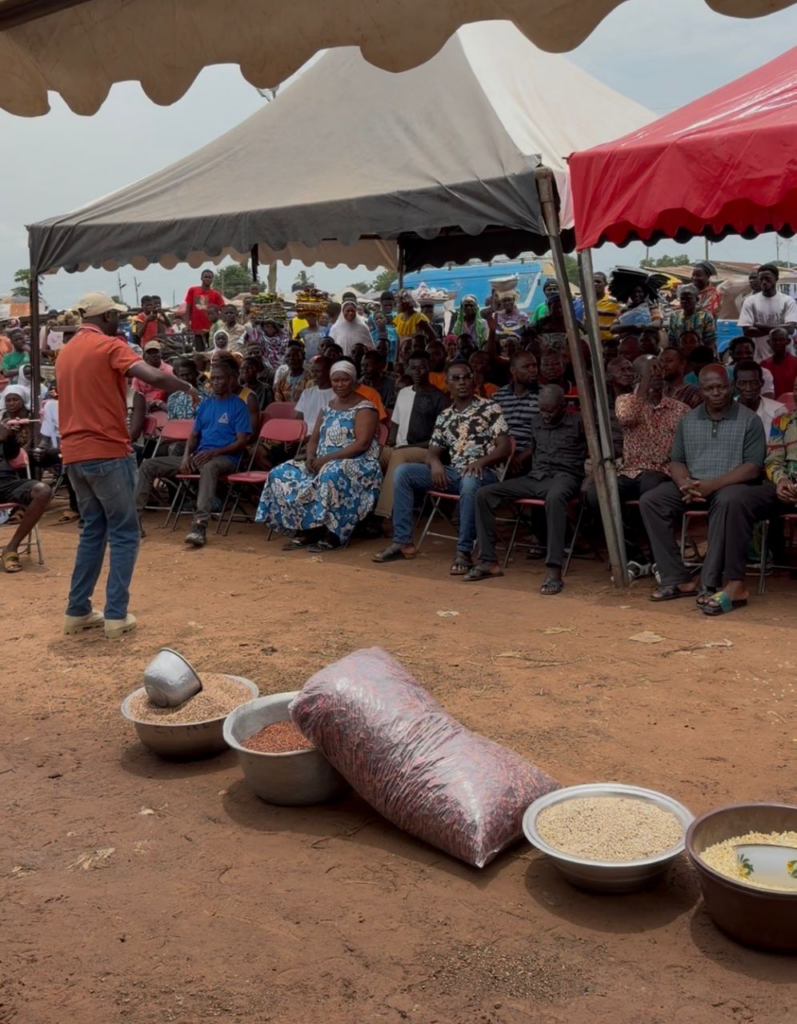
Almost immediately after the primary, allegations of vote buying and inducement surfaced. Reports circulated that delegates had received items such as 32-inch television sets, boiled eggs and other goods, which critics described as attempts to influence voting behaviour.
Baba Jamal admitted to distributing television sets but rejected claims that the items were meant to buy votes, insisting that he was known for supporting constituents and that his actions were being misinterpreted. He also stated that he had, in the past, set aside substantial funds to provide loans to constituents.
The NDC leadership responded by condemning the alleged conduct as inconsistent with party values and established a three-member committee to investigate the matter. The committee was chaired by former Information Minister Kofi Totobi Quakyi, with legal and parliamentary figures initially including Mahama Ayariga, later replaced by Inusah Fuseini, and Emefa Fugah.
The NDC Majority Caucus in Parliament went further, publicly calling for the annulment of the primary results and the disqualification of any candidates found culpable, signalling deep internal unease.
Diplomatic recall and institutional scrutiny
On the same day as the primary, President John Dramani Mahama ordered Baba Jamal’s immediate recall as High Commissioner to Nigeria, linking the decision directly to the allegations. The Presidency explained that while accusations had been made against multiple aspirants, Baba Jamal’s status as a serving public officer made his continued stay in office untenable amid the controversy.
The Office of the Special Prosecutor also announced investigations into alleged vote buying and vote selling linked to the Ayawaso East primary, as well as claims of an assault on an OSP officer during attempts to serve investigative documents.
A defining moment
Baba Jamal has denied engaging in vote buying or electoral malpractice and has pledged cooperation with both parties and institutional investigations. He has acknowledged his recall and expressed appreciation for the opportunity to serve as High Commissioner.
Nevertheless, his decision to contest the primary while still serving as a diplomat, stepping aside only after allegations emerged, has drawn sustained criticism. To many observers, it represents a clash between personal ambition and ethical expectations, particularly given the emotional context of contesting against the widow of a late sitting MP.
For supporters, his victory signals resilience and strategic calculation ahead of a crucial by-election. For critics, it underscores long-standing concerns about inducement, internal party discipline and the integrity of internal elections.
Whatever the outcome of the investigations, Baba Jamal’s political career once again sits at the centre of national debate. From Akwatia’s courtroom battles to Ayawaso East’s unfolding storm, his story mirrors broader tensions within Ghana’s democratic practice — and the decisions taken in this moment may shape how future internal party elections are conducted across the political divide.
About the Author