
Thousands of undocumented or irregular Ghanaian immigrants living in Spain are to benefit from the Spanish government’s new immigration policy aimed at regularising irregular immigrants and asylum seekers in the country.
The new policy introduced by the Prime Minister of Spain, Pedro Sánchez, targets undocumented immigrants, including Ghanaians, who have lived in the European country for at least five months before December 31, 2025.
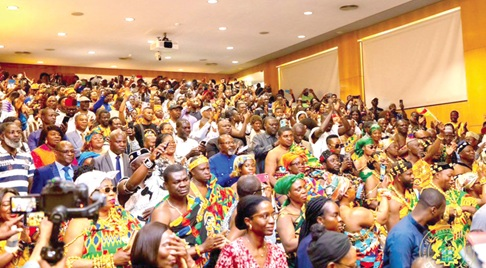
Ghana’s Minister of Foreign Affairs, Samuel Okudzeto Ablakwa, confirmed this during his interaction with the Ghanaian Community in Vic, Spain, last Sunday, following a bilateral engagement with his Spaniard counterpart, José Manuel Albares Bueno, last Friday on the sidelines of the Fourth Meeting in Defence.
Democracy held in Barcelona, Spain.
The Ghanaian beneficiaries would form part of the 500,000 undocumented immigrants the Spanish government has deemed qualified for the regularisation and documentation, which commenced on Thursday, April 16, 2026 and would end at the end of June this year across Spain.
The policy, the first of its kind in more than 20 years, is designed to bring people who are already embedded in Spanish society and the labour market into the legal system.
Benefits under policy
Under the arrangements, the regularised immigrants would obtain an initial one-year residence right as an entry point into legal status.
After a year, the regularised migrant would transition into one of Spain’s ordinary residence pathways under the general immigration framework, but not to permanent residence.
It would also offer immigrants the opportunity to work anywhere in Spain, access formal employment contracts and a pathway out of the informal economy.
It is also a means to reduce labour exploitation and provide legal certainty for both workers and employers.
For children of applicants who are already in Spain, a five-year residence authorisation would be issued, offering greater stability for families.
It is expected to also legally employ immigrants under the policy to register in Spain’s social security system and access to services, including formal labour protections, pension contributions and other employment-related benefits.
The regularisation regime, however, would not provide automatic Spanish citizenship, as nationality by residence requires at least 10 years of legal residence, except nationals of Ibero-American countries, Andorra, the Philippines, Equatorial Guinea, Portugal, or people of Sephardic origin, who need two years, as well as five years for recognised refugees.
It is also devoid of voting rights in general or regional elections unless applicants later acquire Spanish nationality.
Impact
The minister described the policy as a “new inclusive, tolerant and forward-looking policy” which would help Ghanaian migrants to get the necessary documents to ensure that their rights as migrants were protected while offering them jobs.
“This win-win policy does not only guarantee legal status, dignity and employment for young migrants; it offers a bold solution to Spain’s ageing population and creates an ecosystem for remittances, skills development and multicultural harmony,” the Foreign Minister said.
Facilitation
Mr Ablakwa indicated that the government would continue to play a key facilitation role in assisting with relevant official documents, as the new Spanish immigration policy required that applicants show they had no criminal record back home.
“We are cooperating with the Ghana Police Service, who have appointed an officer to discuss with the Ghanaian community here how to fill the criminal record forms to expedite their application.
“The forms will be made available to those who may need them, and then we will take them back to the country for further checks and then returned as soon as practicable to enable you to benefit from the progressive policy of the Spanish government,” he added.
The minister added that the government of Ghana and the Spanish government had also agreed to deepen their cooperation in maritime security and to sign labour mobility agreements as soon as practicable to create more employment avenues for Ghanaians abroad.
In an interview with the Daily Graphic, a Ghanaian undocumented immigrant, Emmanuel Kwabena Amponsah, lauded the Spanish government for the intervention, indicating that it would help in their work and also give them peace of mind.
He added that, having been in the country for more than a year, he had been afraid of being deported one day.
He also thanked the Minister of Foreign Affairs for bringing a police officer to take us through the process and make available the police clearance forms.
Another immigrant, Sarah Mensah, appealed to the minister to ensure that there were no delays, especially with the processing of the police clearance forms, so that they could benefit from the amnesty.
About the Author