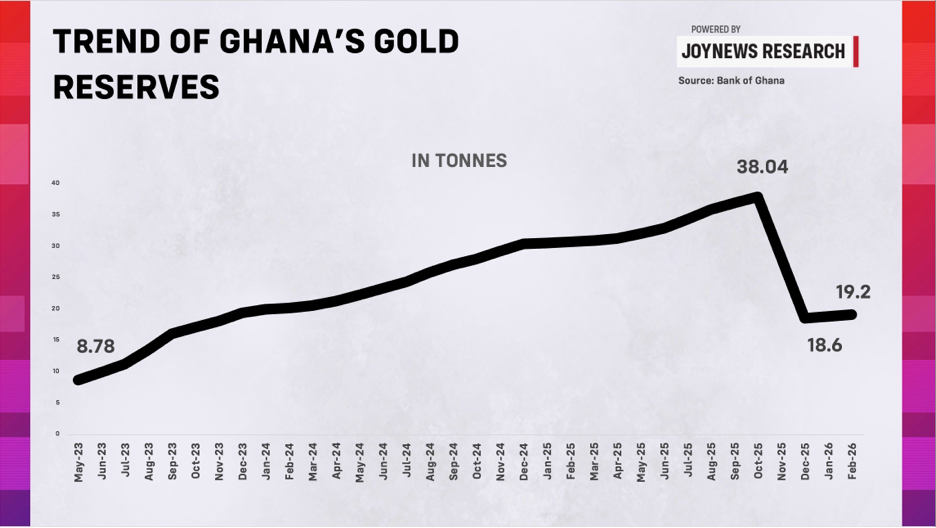
Ghana’s economy will remain relatively insulated from the fallout of the US–Iran conflict as it benefits from elevated gold prices, Fitch Solutions has disclosed.
In its latest article, it said although the global gold price has fallen by 14% since the conflict started in late February 2026– reflecting higher US yields, tighter monetary policy expectations and a stronger dollar, the March 27, 2026 spot price of US$4,413 per ounce remains nearly three times the 2015–2024 average of USD1,603/oz.
Against this backdrop, its Commodities team maintains its forecast that gold will average US$4,600 per ounce this year, the highest annual average on record and 33.7% above the 2025 average of US$3,442 per ounce.
“We have shifted to our “extend‑to‑end” war scenario, which assumes the Middle East conflict persists for roughly another month, although risks remain elevated that we could transition into the “extend‑to‑escalate” scenario, which is marked by a longer and more intense period of hostilities”.
Ghana to Receive Substantial Dollar Inflows
As Africa’s largest gold exporter, the UK-based firm said Ghana will receive substantial dollar inflows over the coming months, underpinning external stability.
“With gold accounting for around three-quarters of Ghana’s merchandise exports in 2025, elevated prices present substantial upside to export earnings. This impact will be amplified by a projected 7.1% increase in gold output this year, driven by project-led supply growth, particularly at the Bibiani, Chirano and Namdini mines”, it said.
“As a result, we forecast gold export receipts to rise by 12.9% to US$23.7 billion, equivalent to 1.5% of GDP and above the 2010–2024 average of 0.9% of GDP [Gross Domestic Product], it said.
Ghana’s Hydrocarbons Net Neutral
The report also said Ghana’s hydrocarbons trade is net neutral, meaning the spike in global energy prices is unlikely to have a material direct impact on its current account position.
“Although Ghana became a net oil importer in recent years due to the Tema Oil Refinery being offline amid chronic debt and maintenance issues, the refinery resumed crude processing in December 2025. As a result, Ghana is likely to be either neutral or a modest net oil exporter this year”.
At a minimum, Fitch Solutions, said higher energy prices should not weigh directly on the trade position and, under a more optimistic scenario, could provide a modest upside.
While higher oil prices will still have second-round effects – such as increasing fertiliser import costs – it projected the current account to remain comfortably in surplus at 4.2% of GDP, well above the 2010–2024 average deficit of 3.8% of GDP.
About the Author