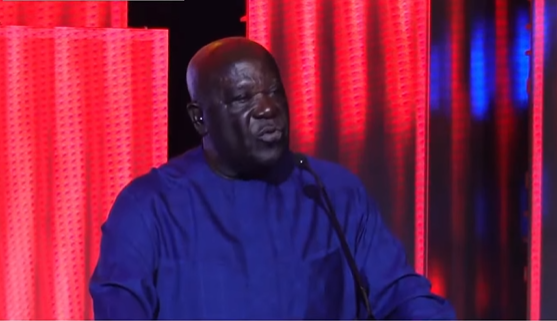
President John Mahama has outlined Ghana’s economic recovery and investment priorities, urging Zambian businesses to take advantage of new opportunities under his administration.
Addressing participants at the Ghana–Zambia Business Dialogue in Lusaka, President Mahama said Ghana had faced serious economic challenges when his government assumed office, similar to the difficulties Zambia has experienced.
“When my administration assumed office, we inherited significant macroeconomic challenges, just like Zambia,” he said.
He explained that through “decisive reforms, fiscal discipline, and bold policy choices”, Ghana has stabilised its economy and restored investor confidence.
President Mahama noted that inflation has declined, international reserves have improved, and Ghana’s credit ratings have been upgraded, signalling renewed global confidence in the country’s economic management.
“The Ghana cedi has stabilised, and investor sentiments have rebounded, as reflected in rising foreign direct investment inflows,” he said.
He added that Ghana is on track to successfully conclude its International Monetary Fund programme by April 2026, demonstrating a commitment to fiscal sustainability, structural reform, and long-term transformation.
President Mahama said Ghana’s development agenda is built on five pillars: industrialisation and value addition, export-led growth, modern infrastructure, strong support for MSMEs, women and youth entrepreneurs, and a transparent, investor-friendly business environment.
These priorities, he explained, are being driven by flagship initiatives such as the 24-hour economy policy and the Accelerated Export Development Programme, anchored in the Volta Economic Corridor.
He listed priority sectors including manufacturing, automobile assembly, agro-processing, logistics, digital and financial services, pharmaceuticals, healthcare, tourism and sanitation.
President Mahama also highlighted major industrial and infrastructure projects, including pharmaceutical and technology parks, garment and textile hubs, agricultural projects and a $10 billion “Big Push” infrastructure programme targeting roads, railways, ports and energy systems.
Turning to cooperation with Zambia, he said there were strong opportunities in agriculture, mining and the digital economy.
In agriculture, he pointed to Zambia’s experience in large-scale farming and food reserves, while noting Ghana’s Feed Ghana programme aimed at boosting production and value addition.
In mining, he said Ghana was ready to share its regulatory experience, noting that artisanal and small-scale mining accounted for 53 per cent of Ghana’s gold exports in 2025, generating over $10 billion in foreign exchange.
On the digital front, President Mahama said Ghana has built strong capacity in fintech, agritech and digital public infrastructure, with financial inclusion standing at 91 per cent.
“The digital economy represents perhaps the most exciting frontier,” he said, adding that Ghana is open to collaboration with Zambia in areas such as cybersecurity, e-commerce, digital payments, and smart healthcare.
He urged private sector leaders from both countries to take the lead in turning policy into action.
“Government will provide the enabling environment, but it is the private sector that must build the factories, take the risks, and create the jobs,” President Mahama said.
About the Author