Ghana has taken a major step in its gold industry by beginning to refine gold locally, a move the government hopes will help the country earn more foreign exchange and keep more value from its mineral resources at home.
The new refining push follows a deal involving Gold Coast Refinery and Rand Refinery. Together, the arrangement puts Ghana in a position to refine at least one metric tonne of gold every week, with the possibility of expanding production as systems and capacity improve.
For a country that has exported raw gold for decades, this is a significant moment. But behind the excitement are growing concerns about whether Ghana can convince the world’s most discerning buyers that its refined gold is clean, legal, and responsibly sourced.
GoldBod has said it is working to address that concern. The agency has announced plans to roll out a gold traceability programme, starting with a pilot covering up to 600 mines. According to GoldBod’s Deputy Chief Executive Officer, Richard Nunekpeku, the goal is to ensure that gold supplied to the Gold Coast Refinery can be traced back to sustainable and properly licensed operations.
“GoldBod will support up to 600 mines under the traceability project so that all gold supplied to the Gold Coast Refinery is traced to make sure they are from sustainable mines,” he said last month.
Still, people familiar with the gold trade say the timing is risky. They argue that starting large-scale refining before a full traceability system is in place could make it harder for Ghana to attract top-tier buyers, especially at a time when illegal mining continues to scar the environment and dominate public attention.
Ghana’s gold exports reached record levels in 2025, earning nearly $21 billion. A large portion of that money came from artisanal and small-scale mining, now fully managed by GoldBod. Exports from this segment alone brought in more than $10 billion, which is about half of last year’s export earnings.
But there is a catch. Almost all of that small-scale gold, about 98.8%, was sold to markets like Dubai and India, where buyers typically accept gold at discounted prices and place less emphasis on strict sourcing rules. The remaining 1.2% of the 103,804 kg ASM gold was spread across eight other countries, including Switzerland, South Africa, China, and the USA, with no gold moving to the UK.
Why traceability matters
Ghana may be Africa’s leading gold producer, but it is also one of the continent’s most visibly affected countries by illegal mining. Rivers have turned brown, farmlands have been destroyed, and in some communities, cocoa farms have been taken over and converted into mining pits.
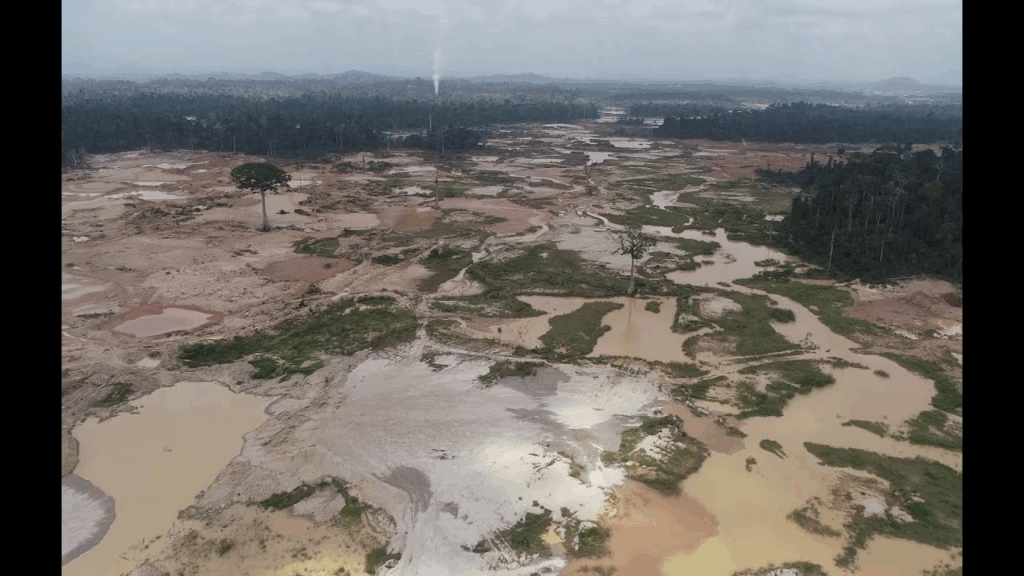
This reality matters in the global gold market. Refining gold locally improves purity and presentation, but it does not answer the bigger question many buyers ask. Where did the gold come from, and how was it mined?
Major bullion buyers, central banks, and international refiners operate under strict responsible sourcing rules, including standards set by the London Bullion Market Association and the OECD.
If gold cannot be clearly traced from the mine to the refinery, buyers struggle to separate legal production from ‘galamsey gold’. When that happens, some buyers walk away, while others demand discounts to protect themselves from reputational and regulatory risks.
Industry sources say that although gold has a global benchmark price, sellers do not always receive that price. Countries with weak traceability, like Ghana, often face compliance discounts, higher insurance costs, and narrower buyer options.
Small-scale mining is where the challenge is most pronounced. Ghana’s artisanal mining sector is large and growing, making effective tracking difficult. For now, the country’s traceability system remains at a pilot stage, while the volume of gold expected to pass through local refineries is set to rise.
In the large-scale space, the Ghanaian authorities are hoping to pass a new legislation that could introduce a sliding royalties rate, positioning Ghana to benefit from future gold booms.
The new rate (5%-12%) is expected to replace the old flat rate, adding about one percentage point for every $500 rise in international gold price, similar to what is being practiced in Burkina Faso.
Sources say the big mining companies are pushing for a lower band ranging 4%-8%, but Accra has only offered to cut an existing 3% mining levy by two percentage points to lessen the tax burden.
Isaac Kofi Agyei is a Data & Research Journalist at JoyNews based in Accra, where he covers mostly finance, economics, banking, and politics across Ghana and West Africa, from detailed analytical reports on all key issues to debt crises to IMF programmes. With his solid academic background in economics and statistics and additional training from credible institutions such as the UNDP, Afrobarometr, Ghana Statistical Service, and a host of others, Isaac has honed his skills in effective data storytelling, reporting, and analysis.
About the Author