
The Ghana Navy has intercepted a major illegal fuel bunkering syndicate operating off the eastern coastline, intensifying efforts to clamp down on maritime crimes that threaten territorial integrity, revenue base and marine environment.
The operation, carried out on Monday about one nautical mile off the coast of Aflao, followed actionable intelligence and a directive from the Chief of the Naval Staff to dismantle the growing fuel smuggling network at sea.
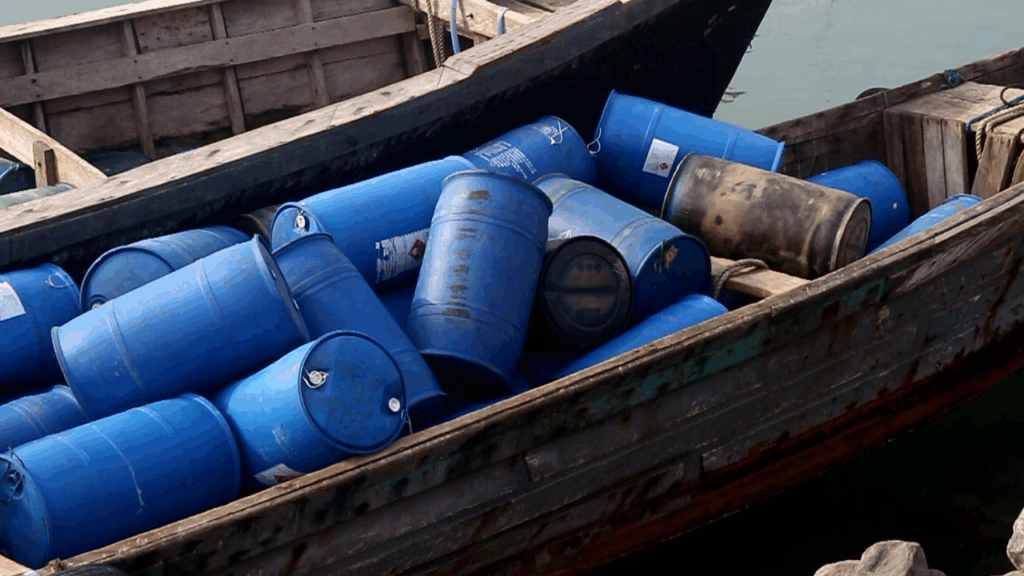
Briefing the media in Tema, the Flag Officer Commanding the Eastern Naval Command, Commodore Solomon Asiedu-Larbi, said naval personnel seized seven locally fabricated dugout canoes and nearly 400 empty barrels, each with a capacity of 250 litres.
“These are not innocent fishing vessels. They are purpose-built for criminality, specifically illegal fuel bunkering,” Commodore Asiedu-Larbi stressed.
Investigations are ongoing to identify the suspects behind this activity.
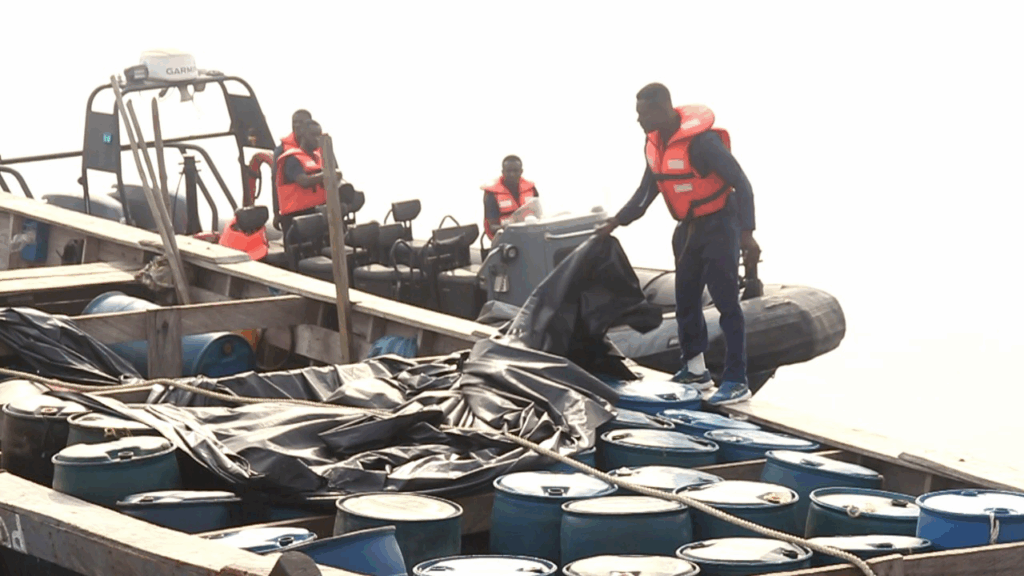
He explained that the syndicate operates with a mothership positioned beyond Ghana’s 12-nautical-mile territorial limit, where fuel is transferred into barrels under the cover of darkness.
Smaller canoes then ferry the fuel towards shore, often with the assistance of some local fisherfolk, before it is offloaded inland to undisclosed hideouts.
The interception was carried out by Ghana Navy Ship (GNS) Aflao as part of an operational plan developed following intelligence gathering.
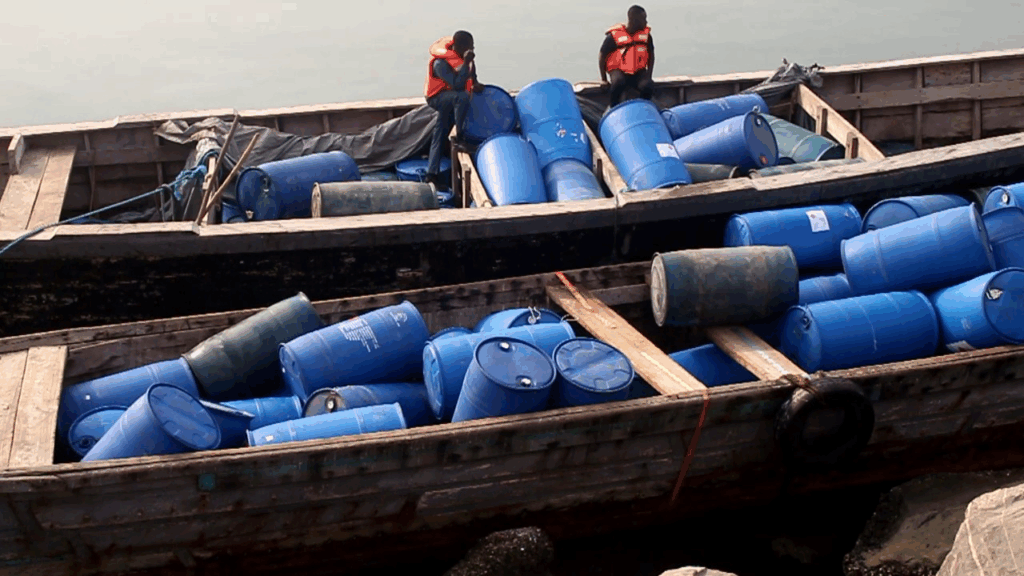
A concurrent land-based operation is also underway to weaken the network.
Commodore Asiedu-Larbi warned that illegal fuel bunkering has serious economic and environmental consequences, denying the state critical tax revenue and exposing consumers to substandard fuel that can damage vehicles and machinery.
He added that fuel spillage during transfers pollutes the sea, threatening marine life and the livelihoods of law-abiding fishing communities.
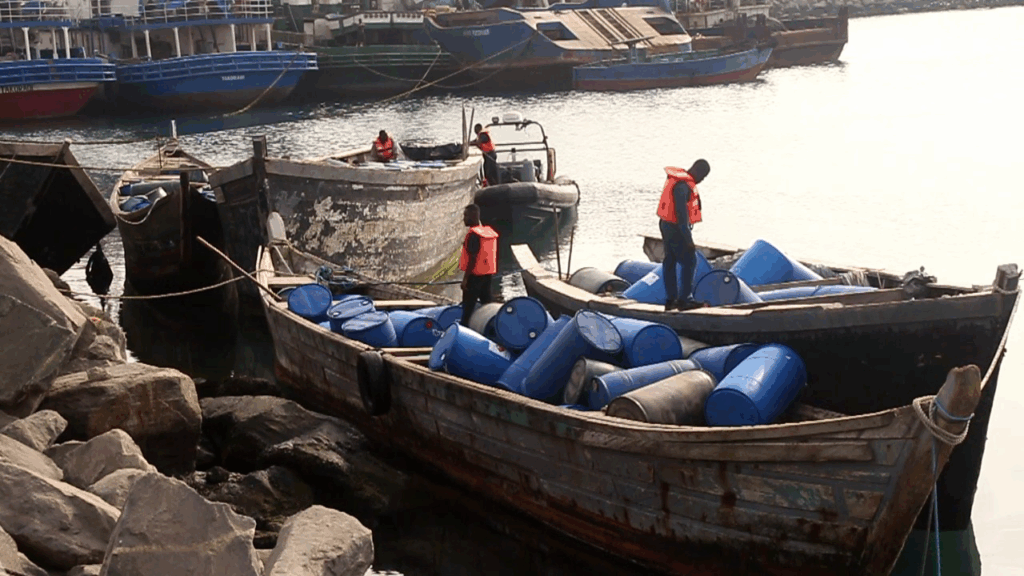
In response, the Chief of the Naval Staff has ordered additional naval assetsto the eastern corridor, with reinforcements already redeployed from the Western Naval Command.
The Navy, he said, is focused on maintaining a sustained presence at sea, enhancing surveillance and boosting intelligence gathering, including plans to deploy more drones.
Acknowledging the role of coastal communities, the Navy will intensify public education to discourage collaboration with criminals.
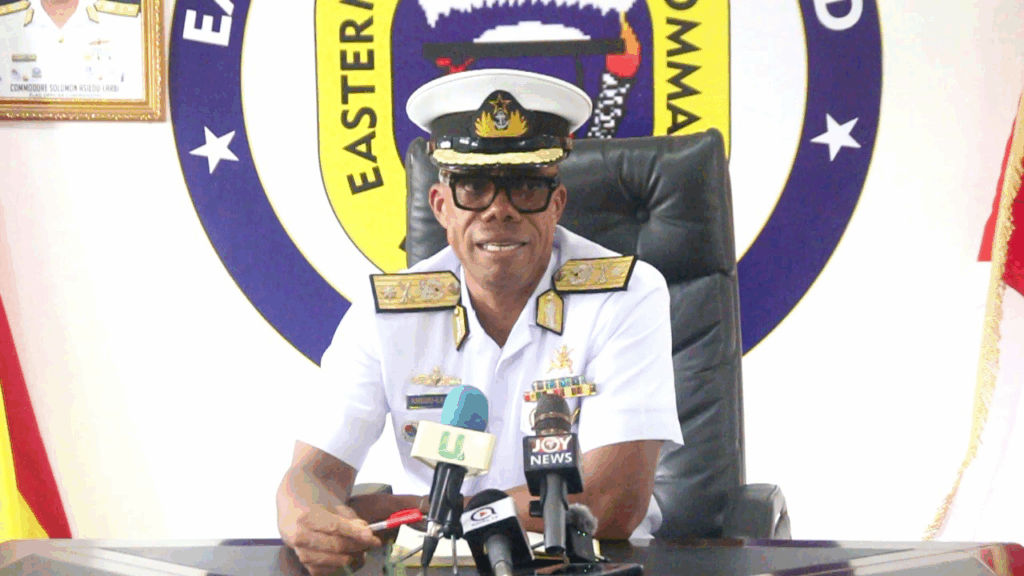
“Instead of conniving with criminals, local communities must see themselves as partners in protecting Ghana’s waters,” Commodore Asiedu-Larbi said.
He reaffirmed the Navy’s commitment to clamp down on fuel smuggling, piracy and other maritime crimes, assuring the public that efforts are underway to reduce illegal fuel bunkering to its lowest ebb and safeguard Ghana’s maritime domain.
Command Operations Officer, Eastern Naval Command, Commander James Dzigbordi Agrah was particular about the implications of the criminal activities at sea.
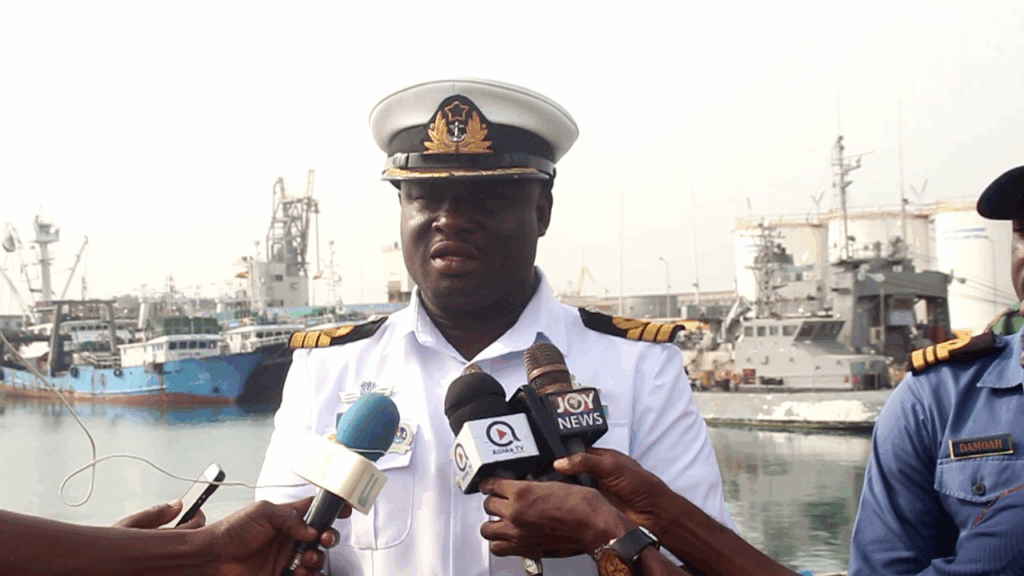
According to him, the illicit trade deprives the state of vital tax revenue, compromises fuel quality, damages vehicle engines, and causes environmental pollution through frequent spillages that contaminate the sea and threaten fish stocks.
“There are serious economic, environmental and security consequences associated with illegal fuel bunkering,” he warned.
Also present at the briefing were the Commanding Officer of Ghana Navy Ship Aflao, Lt. Commander Albert Brobbey Damoah, and the Acting Director, Public Relations, Naval Headquarters, Lt. Commander Ezekiel Ako Nai.
About the Author
