
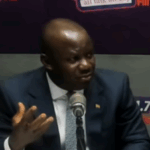
The Member of Parliament for Damongo and Ranking Member on Parliament’s Foreign Affairs Committee, Samuel Abu Jinapor, has described Ghana’s inclusion in the United States’ suspension of immigrant visa processing for 75 countries as deeply troubling, warning that it signals a worrying decline in Ghana–US relations.
Speaking on Asempa FM’s Ekosiisen current affairs programme on Thursday evening, the former Lands and Natural Resources Minister said the development should concern all Ghanaians, given the long-standing and mutually beneficial diplomatic ties between Accra and Washington.
According to Mr Abu Jinapor, Ghana and the United States have historically enjoyed strong bilateral relations that translated into tangible economic and development gains.
He recalled that under the presidency of Jerry John Rawlings, Ghana benefited from the African Growth and Opportunity Act (AGOA), which significantly boosted the country’s textile industry.
He also cited former President J.A. Kufuor’s tenure, during which then US President George W. Bush paid a historic visit to Ghana, culminating in the Millennium Challenge Compact and major infrastructure projects, including the construction of the N1 Highway.
However, the Damongo MP expressed concern that the relationship has deteriorated in recent years, pointing to the absence of a substantive US ambassador to Ghana as a worrying indicator.
He said the relationship has dimmed and it is not the best, explaining that what is happening now should worry everyone.
Abu Jinapor noted that the United States remains a global superpower whose engagement with Ghana is critical to the country’s economic and foreign policy interests.
He urged the government and the Ministry of Foreign Affairs to reassess Ghana’s diplomatic posture and tone, cautioning against what he described as increasingly confrontational and poorly calibrated public pronouncements.
He argued that Ghana’s traditional foreign policy stance of being “friends of all and enemies of none” appeared to be under strain, citing recent comments by government officials on global conflicts.
He referenced the Foreign Affairs Minister, Samuel Okudzeto Ablakwa’s public accusation of Israel committing genocide, as well as Ghana’s posture during tensions involving the United States and Venezuela, where he said, Ghana appeared to condemn the US while claiming to be “monitoring” developments.
He said that cannot be Ghana’s posturing, adding that Ghana’s positions on international issues must always serve the country’s national and economic interests.
While affirming Ghana’s right as a sovereign state to take principled positions on global matters, Mr Abu Jinapor emphasised the need for nuance, strategy and restraint in diplomatic communication.
He said our language lately has not been very diplomatic.
He insisted that by all means Ghana has a right to take positions on international issues, but they must be principled, strategic and economically informed.
He called on the government to recommit to economic diplomacy and Ghana’s non-aligned tradition, warning that excessive belligerence on the international stage could undermine the country’s interests.
According to Abu Jinapor, all nations today pursue economic diplomacy, and that should be Ghana’s goal.
Read also: Trump administration pauses immigrant visa processing for 75 countries
The full list of countries to be affected by the suspension to come into force on January 21, are: Afghanistan, Albania, Algeria, Antigua and Barbuda, Armenia, Azerbaijan, Bahamas, Bangladesh, Barbados, Belarus, Belize, Bhutan, Bosnia, Brazil, Cambodia, Cameroon, Cape Verde, Colombia, Democratic Republic of the Congo, Cuba, Dominica, Egypt, Eritrea, Ethiopia, Fiji, The Gambia, Georgia, Ghana, Grenada, Guatemala, Guinea, Haiti, Iran, Iraq, Ivory Coast, Jamaica, Jordan, Kazakhstan, Kosovo, Kuwait, Kyrgyzstan, Laos, Lebanon, Liberia, Libya, North Macedonia, Moldova, Mongolia, Montenegro, Morocco, Myanmar, Nepal, Nicaragua, Nigeria, Pakistan, Republic of the Congo, Russia, Rwanda, Saint Kitts and Nevis, Saint Lucia, Saint Vincent and the Grenadines, Senegal, Sierra Leone, Somalia, South Sudan, Sudan, Syria, Tanzania, Thailand, Togo, Tunisia, Uganda, Uruguay, Uzbekistan and Yemen.
About the Author
