In a tour designed to celebrate political loyalty, Ghana’s political realities—where gratitude intersects with pressing developmental needs—came sharply into focus.
The National Chairman of the National Democratic Congress (NDC), Johnson Asiedu Nketia, concluded the first day of his “Thank You Tour” of the Bono East Region, with a clear message from the grassroots: appreciation is welcome, but action is imperative.
The “General”, as he is affectionately known, traversed the communities of Kajaji, Kwame Danso, Atebubu, Prang, and Yeji on Wednesday, fulfilling a pledge to personally thank the region for its decisive support in the 2024 general elections.
A Tour of Gratitude
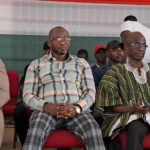
Amidst cheering supporters waving NDC paraphernalia, Chairman Asiedu Nketia framed the tour as a moral duty.
“When the people stand with you in the rain and sun to secure victory, you must return to look them in the eye and say ‘Thank You,’” he stated at a stop in Kwame Danso.
“The Bono East Region has shown unwavering commitment to the NDC, and this is our first step in acknowledging that partnership beyond the ballot box.”
The atmosphere in each town was initially festive, a celebration of shared political triumph.
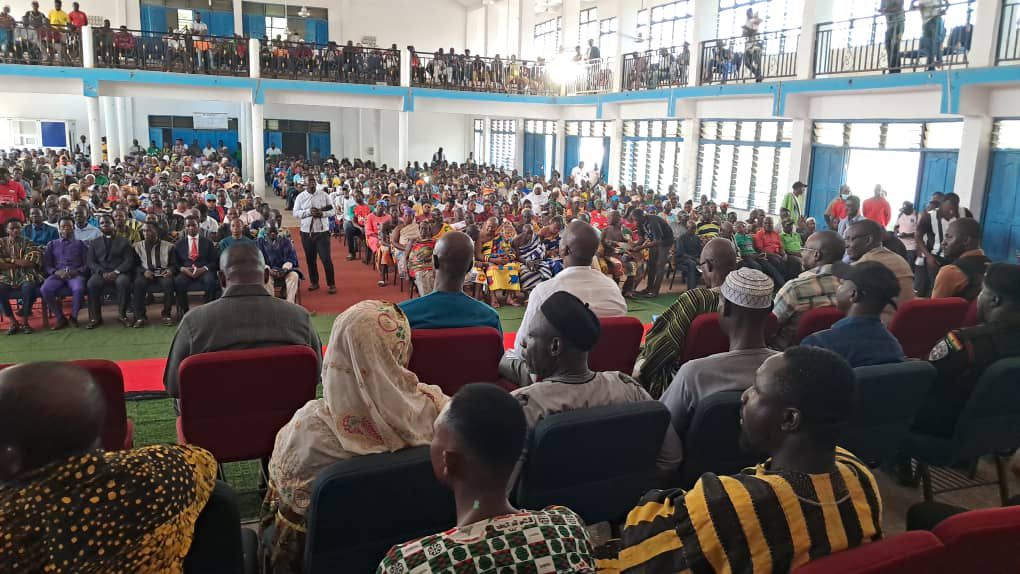
However, when the Chairman sat with the traditional authorities—the Nananom—the tone of the conversation shifted from political celebration to community advocacy.
The Agenda of the People: Water and Roads
In the solemn courtyards of the chiefs, the chairman’s gratitude was met with a catalogue of long-standing challenges.
The Nananom, while welcoming him as a son and a leader, presented a unified front on pressing infrastructural deficits.
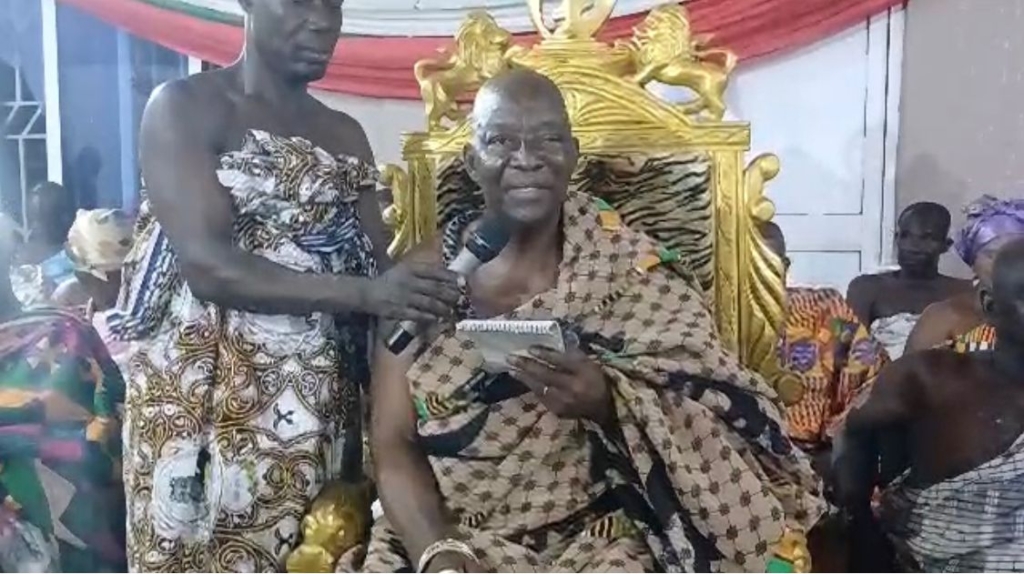
For Atebubu and Prang, the cry was for water. The chiefs described a daily struggle where women and children trek long distances for potable water, a situation they termed a “crisis of dignity and health.”
For Yeji, a key trading hub on the banks of the Volta Lake, the demand was for roads. The poor state of key road networks, they argued, stifles economic activity, inflates the cost of goods, and makes travel hazardous.
“The polls are closed, and you have seen our support,” said the Paramount Chief of the Yeji Traditional Council and member of the Council of State, Pimampim Yaw Kagbrese V.
“Our vote was our promise. Now, we wait for the promise of development. Our most basic need is our roads. Please do well to fix it for us.”
The Chairman’s Response: Assurance and a Call for Patience
Faced with these direct appeals, Mr Nketia transitioned from party leader to government advocate. He assured the traditional leaders and the gathered communities that their concerns were now officially noted and would be channeled to the appropriate government ministries.
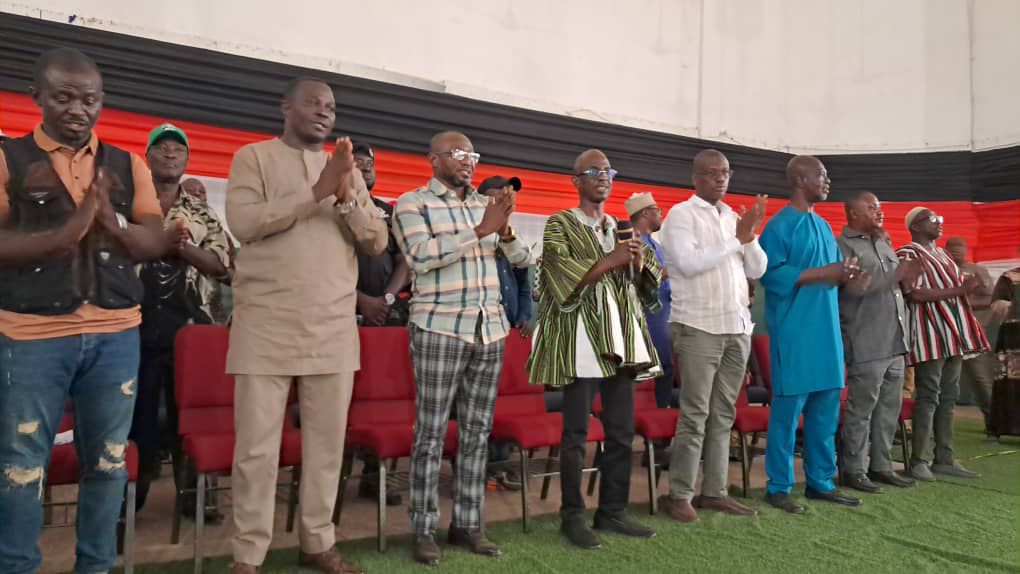
“The government of President John Dramani Mahama is a listening government, and development is at the core of our agenda,” he stated at a gathering in Yeji. “I have heard Nananom loudly and clearly—water for Atebubu and Prang, roads for Yeji. These are not just requests; they are legitimate needs.”
However, he coupled this assurance with a strategic appeal for patience. “We are just one year into this administration,” he reminded the crowds. “The financial landscape we inherited is challenging, but we are committed. I urge you, bear with us. The wheels of development may turn slowly, but they have begun to turn.”
What Comes Next?
The first day of the Bono East tour has set a clear precedent: the journey ahead for the government will be judged not by words of gratitude, but by tangible deliverables. The people of Atebubu, Prang, and Yeji have placed their markers on the table—water and roads.
As Chairman Asiedu Nketia moves to other parts of the region, the balance between political “thank you” and actionable development plans will remain his—and his party’s—key challenge. For the residents of these five towns, the hope is that the Chairman’s listening ear translates into the government’s swift action.
The “Thank You Tour” continues, but for many in the Bono East, the real conversation about development has just begun.
About the Author