
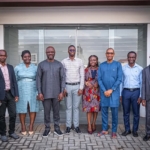
The Africa Centre for Energy Policy (ACEP) has hosted a three-day peer learning exchange with Action Mines Guinea, aimed at deepening collaboration and strengthening civil society advocacy across West Africa.
The high-level delegation from Guinea was led by the Executive Director of Action Mines Guinea, Mr Amadou Bah, who engaged ACEP in a series of practical knowledge-sharing sessions focused on navigating shrinking civic spaces and sustaining impactful advocacy.
According to ACEP, the reflective conversations were designed to sharpen strategies for civil society organisations operating in increasingly constrained environments, while maintaining strong ethical standards and safeguarding systems.
“Such engagements are critical for strengthening the resilience of civil society organisations, especially at a time when civic space is shrinking across the region,” a representative of ACEP noted.
The discussions explored how organisations can leverage strong internal structures, partnerships, and strategic communication to influence policy, engage the public, and drive accountability.
Participants also shared experiences on how to remain effective and credible in advocacy work, despite growing political and regulatory pressures in some West African countries.
Action Mines Guinea, on its part, offered insights from its work in Guinea, highlighting the unique challenges and opportunities in the country’s extractive and governance sectors. The group reaffirmed its commitment to regional collaboration, stressing the need for stronger cross-border learning among civil society actors.
The exchange further underscores ACEP’s expanding influence beyond Ghana, positioning the organisation as a regional hub for policy dialogue, capacity building, and knowledge sharing.
ACEP has, over the years, played a key role in promoting transparency, accountability, and good governance in the energy and extractive sectors, particularly through policy research, citizen engagement, and advocacy.
Organisers say the peer learning initiative is expected to strengthen long-term partnerships and enhance the ability of civil society organisations to respond to emerging governance challenges across the sub-region.
About the Author
