

A wave of anxiety and frustration is sweeping through the University of Ghana (UG) as students grapple with a recently unveiled provisional fee schedule that reveals significant increases in academic costs.
The hefty hikes, averaging over 25%, have sparked urgent calls for the university management to clarify the rationale behind such drastic financial adjustments.
The provisional figures, made available to the public, reflect a stark reality for both incoming freshmen and returning students just months before the new academic year begins.
Many are left questioning their financial preparedness as the implications of these increases loom large.
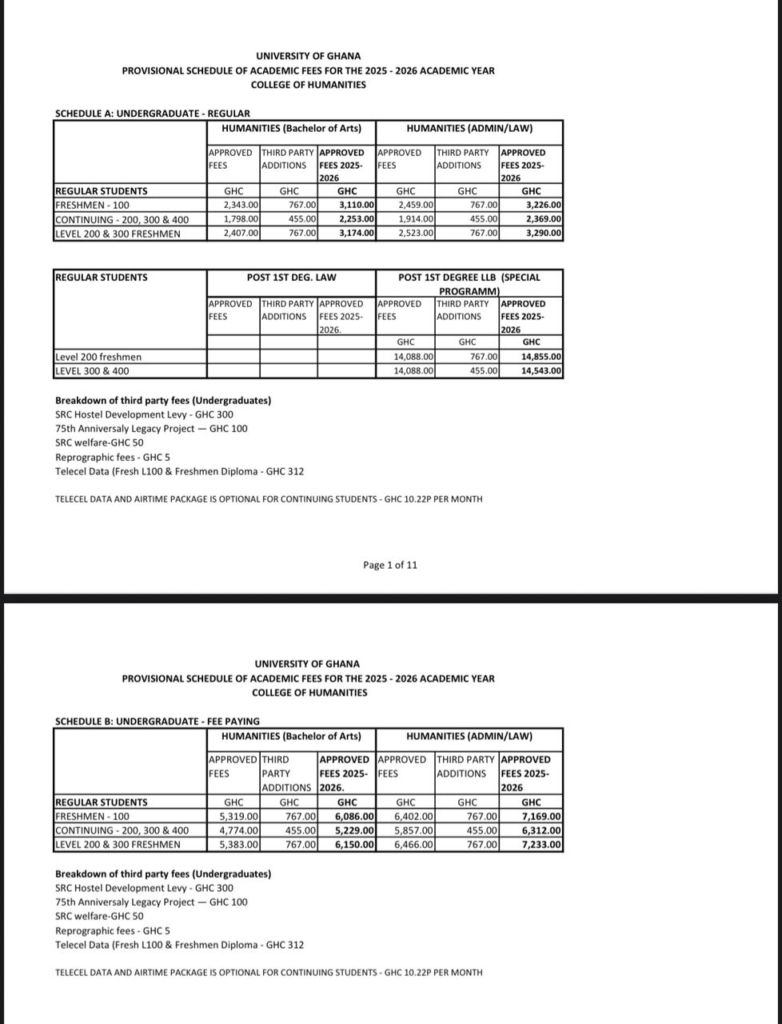
The College of Humanities, which typically accommodates the largest student body at the university, appears particularly affected by these adjustments.
For instance, Level 100 freshmen are set to pay an eye-watering GH¢3,110, representing a 34% spike from last year’s GH¢2,319.
Continuing students in the same college will also feel the pinch, with fees escalating by 27% from GH¢1,777 to GH¢2,253.
The highly competitive University of Ghana School of Law is not immune to these trends either. Incoming law students now face an increased bill of GH¢3,226, which is 33% higher than the previous year’s GH¢2,435. Their continuing counterparts will see their fees climb from GH¢1,890 to GH¢2,396.
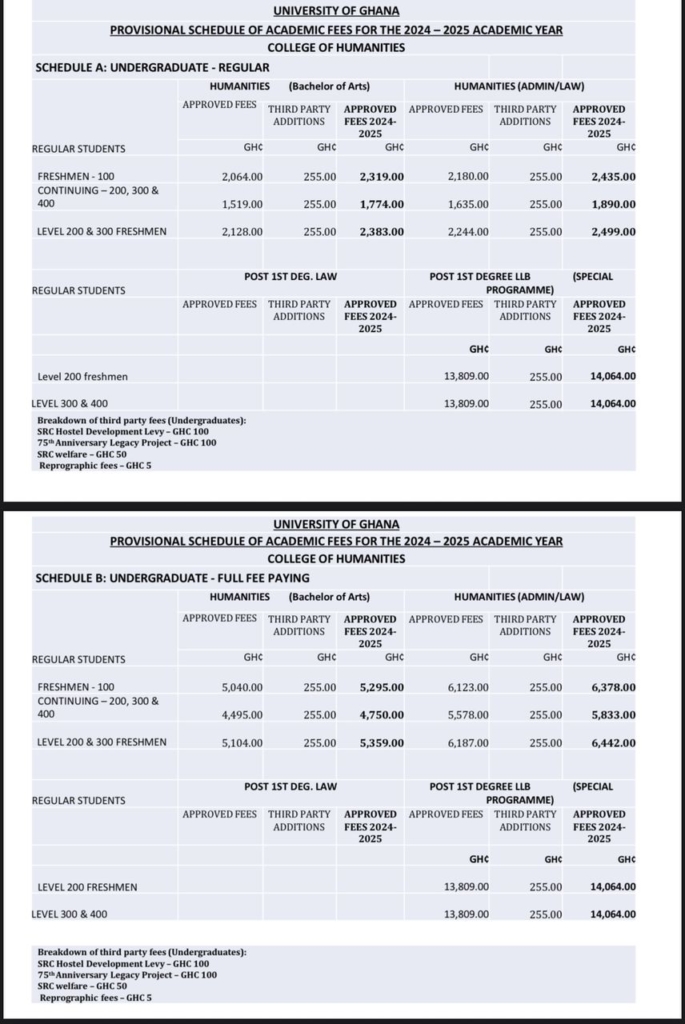
Upon examining the detailed fee breakdown, a significant contributor to this unsettling trend appears to be steep increases in third-party levies.
These auxiliary charges, which were a manageable GH¢255 last year, have skyrocketed to GH¢767 for freshmen, marking an astonishing 200% rise. Continuing students will now pay GH¢455.
The breakdown of these additional fees includes:
- SRC Hostel Development Levy: GH¢300
- 75th Anniversary Legacy Project: GH¢100
- Telecel Data Package (Freshers): GH¢312
- SRC Welfare Dues: GH¢50
- Reprographic Fees: GH¢5
This trend of steep fee increases is not confined to the College of Humanities and the School of Law. Other specialised faculties, including the College of Health Sciences, College of Basic and Applied Sciences, and College of Education, have also reported hikes ranging between 25% and 35%.
The lack of notification prior to the fee adjustments has emerged as a critical point of contention among the student body.
A coalition of student representatives is urging university authorities to provide comprehensive justifications for the rapid increases.
They warn that such financial burdens may impose added strain on students and their families.
About the Author