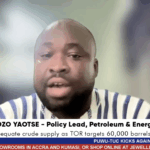
Kodzo Yaotse, Policy Lead for Petroleum and Energy at the African Centre for Economic Policy (ACEP), says the impact of the Tema Oil Refinery’s (TOR) restart on Ghana’s fuel market will largely depend on how the facility operates.
Speaking on Pulse on JoyNews, Yaotse noted that the refinery’s ability to supply the market consistently over the long term is key to stabilising prices.
“To the extent it will be able to influence the market in terms of price stability will largely depend on one, its reliability—that is, is it able to refine the product and supply the market over a longer term,” he said. Yaotse added that whether TOR sources its own crude or operates as a tolling facility, refining crude for third parties, will determine its influence on fuel prices.
“If it is going to buy its own crude, refine it, and then pump into the market, then we can be sure there will be some impact on reliability and price stability at the pump,” he explained.
The comments come as TOR resumes crude oil refining after years of inactivity, following extensive Turnaround Maintenance (TAM) works on the refinery’s Crude Distillation Unit (CDU) between August and October 2025.
The National Petroleum Authority (NPA) has cleared TOR to restart operations, confirming that all safety and operational requirements have been met.
The refinery is currently operating in a phased approach to stabilise systems and optimise performance ahead of full recommissioning.
A new furnace, F-61, has also been installed and will increase TOR’s refining capacity from 28,000 barrels per stream day to 45,000, with medium-term plans to expand to 60,000 barrels per day.
About the Author