
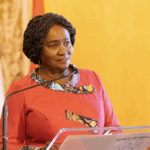
The government’s efforts to push the country towards a 24-hour economic lifecycle are already yielding encouraging results, with pilot industrial zones recording marked increases in output and night-shift employment, the Vice-President, Professor Naana Jane Opoku-Agyemang, has said.
The Vice-President explained that the policy — one of the flagship initiatives of President John Dramani Mahama’s administration — was gradually proving to be a practical tool for boosting productivity, creating jobs and increasing economic activity.
“In pilot zones such as Tema Light Manufacturing Belt, 24-hour operations have already recorded significant increases in output and units’ employment in night shifts”.
“This model multiplies capacity, maximises the use of resources and creates jobs,” the Vice-President said at the 14th Ghana Industry and Quality Awards in Accra on November 30.
The Association of Ghana Industries (AGI) initiated the Ghana Industry and Quality Awards to reward companies and industries for their performance across various business sectors nationwide.
On the theme, “Creating a conducive business environment & quality standards for industrial competitiveness in a 24-hour economy,” the annual awards, held in November each year, marks the climax of the National Industrial Week celebration.
Some of the award-winning companies on the night included Honeycomb Foods Ltd, Pioneer Business Investments Ltd, Eden Tree, CBI Ghana Ltd, Nexans Kabelmetal Ghana Ltd, Niche Cocoa Industry Ltd and Nestlé Ghana Ltd.
The Ghana Standards Authority (GSA) and the Ministry of Trade, Agribusiness and Industry (MoTAI) support the awards.
Prof. Opoku-Agyemang stated that the 24-Hour Economy policy was part of a broader industrialisation drive aimed at positioning the country for economic resilience and export competitiveness.
She said the policy sought to incentivise manufacturing and light industries to operate in shifts around the clock, supported by essential public services.
“We are working to provide critical public services on a continuous basis. We plan for ports, regulatory agencies, even licensing bodies to match the continuing needs of an industrial cycle,” the Vice-President said.
Praising the AGI for its contribution to national development, Vice-President Opoku-Agyemang explained that its members were “champions of made-in-Ghana products” and important partners in the country’s industrial transformation agenda.
Persistent bottlenecks
However, Prof. Opoku-Agyemang insisted that the government remained mindful of the persistent bottlenecks confronting manufacturers, despite the promising gains.
“We are not naive to the challenges. We know that many industries currently operate below capacity due to constraints such as inconsistent power supply, limited access to credit and high utility costs.
“But we are fully committed to tackling these under a broader industrial agenda.
And we will work with you to address them,” the Vice-President stated.
She assured industry players of improved access to raw materials through agribusiness support, preferential procurement for local products and enhanced export opportunities driven by logistics and infrastructure investments — including modernised ports and the operationalisation of the Boankra Inland Port.
Govt’s commitment
The Minister of Trade, Agribusiness and Industry, Elizabeth Ofosu-Adjare, said the government was committed to improving the business environment with ongoing regulatory reforms that were simplifying processes, reducing delays and enhancing transparency across the economy.
She explained that the digital transformation of trade systems was easing constraints for the private sector as the digitalisation of business and trade operations, from company registration to customs clearance, was removing bottlenecks and giving enterprises the certainty and predictability they need to grow.
The Trade Minister urged manufacturers and exporters to support the reforms as the government, through its procurement power, demonstrated its commitment to promoting the patronage of locally manufactured goods and encouraged the private sector to respond positively.
“Let me take this opportunity to encourage the private sector, especially exporters, to respond positively to the government intervention in the foreign exchange platform regime”.
“Captains of industry, the government, through the procurement power, is demonstrating its commitment to stimulate the patronage of locally manufactured goods.
This is reflective in the government’s procurement of sanitary pads under the Free Sanitary Pads Initiative for girls in public and senior high schools,” she added.
Fair competition
The outgoing President of the AGI, Dr Humphrey Ayim Darke, stressed that the effectiveness of the 24-Hour Economy policy hinged not only on increased production, but also on maintaining fair competition, market integrity and public confidence.
He urged the government and regulators to tighten border controls and strengthen customs enforcement, with closer coordination among the GSA, the Food and Drugs Authority, Customs and the AGI, to clamp down on substandard and illegally imported goods entering the country through smuggling.
Dr Darke also stressed the need for the government to put in place clearly defined penalties and strong enforcement measures to deter offenders and safeguard the local market.
About the Author
