
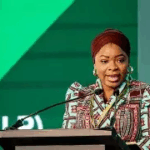
Deputy Presidential Spokesperson Shamima Muslim has urged Ghana’s marketing and communications industry to take a central role in crafting a renewed national story that reflects the country’s strengths, aspirations, and ongoing transformation under the “Resetting Ghana Agenda.”
Addressing industry leaders, innovators, and communicators at the 14th Marketing World Awards (MWA) in Accra, Ms Muslim said Ghana had reached a crucial moment where brand builders and storytellers must become collaborators in shaping a unified, optimistic national identity capable of driving development, attracting investment, and strengthening citizen confidence.
She said storytelling had been at the heart of every major national transformation across the world, and Ghana could no longer leave its narrative to chance.
“There is power in storytelling for nation-building. We need you not only as spectators, sometimes disgruntled voters even, but as collaborators at the centre of our national transformative journey,” she said.
Ms Muslim noted that Ghana possessed unique value propositions that, if deliberately amplified, could position the country as a leading investment, tourism, and cultural hub.
These include democratic stability, a talented youthful population, Ghana’s Pan-African symbolism, its expanding creative economy, and its digital innovation landscape, all of which, she said, represented “brand assets” waiting to be elevated.
Drawing parallels with global examples, she cited Rwanda, Singapore, South Korea, Dubai, and Kenya as countries that used storytelling to redefine national identity long before their economic transformations became evident.
“A nation becomes the story it deliberately chooses to tell,” she said. “It tells it clearly before it becomes it.”
Ms Muslim outlined aspects of the government’s resetting agenda, describing it as a renewed chapter requiring strong private sector partnership to drive economic recovery, governance reforms, innovation, and growth.
She highlighted the gains made in fiscal discipline, restored investor confidence, and strengthened public financial management as signs of renewed leadership credibility.
She said measures such as the reduction in ministerial appointments, the elimination of waste, limits on foreign travel, and enforcement of accountability among officials demonstrated a shift toward responsible governance.
These reforms, she stressed, laid the foundation for a long-term growth story.
On the 24-Hour Economy initiative, Ms Muslim said it was designed to expand productivity, create jobs, and reposition Ghana as a competitive hub that operates around the clock, and that the success of the initiative depended heavily on private sector innovation, collaboration, and investment, not government alone.
She also referenced the Black Star Experience project, a national rebranding initiative aimed at positioning Ghana as the global capital of Pan-African culture, creative arts, and tourism, urging marketers to explore how their brands could plug into the emerging national vision.
Ms Muslim urged communicators and the media to amplify truth-driven narratives about Ghana’s recovery, counter misinformation, and rebuild public trust.
“If the cedi is doing well, tell that story. If the economy is rebounding, tell that story too. We are not out of the woods yet, but we are certainly not where we started,” she noted.
She emphasised that a strong national brand lifts corporate brands equally and expands markets for business growth, adding that “a confident Ghana creates fertile ground for business expansion.”
Ms Muslim urged marketers and communicators to “hold on to faith and works” in advancing a unified Ghanaian story defined by optimism, discipline, creativity, and shared progress.
“Let us tell the story of the Black Star – bold, innovative, unstoppable. When Ghana works, your businesses will grow, and our economy will expand. Let us tell our national story with courage, unity and purpose,” she stated.
Mr Akin Naphtal, CEO of InstinctWave, organisers of the Marketing World Awards, who reflected on the evolution of the awards since their inception more than a decade ago, said the MWA had grown from a West African initiative into a continental platform honouring innovation, creativity, and excellence across Africa’s marketing and communications landscape.
Mr Naphtal said artificial intelligence was reshaping the industry by transforming how brands analysed data, connected with consumers, and designed personalised experiences.
However, he stressed that technology could not replace human creativity, emotional intelligence, and cultural understanding.
“AI cannot replace the human spirit that drives storytelling, emotional connectivity, and authentic brand experience,” he said. “The future belongs to those who merge technology with humanity.”
Established over a decade ago, the Marketing World Awards have become one of Africa’s most respected honours in marketing, communications, and brand excellence.
The awards recognise iconic brands, outstanding organisations and high-performing individuals whose innovative strategies, creativity, and consumer-focused campaigns have shaped markets across the continent.
Originally launched in Nigeria before expanding to Ghana and later Kenya, the MWA has evolved into a premier Pan-African platform spotlighting excellence in technology, media, sales, public sector communication, advertising, and corporate branding.
About the Author
